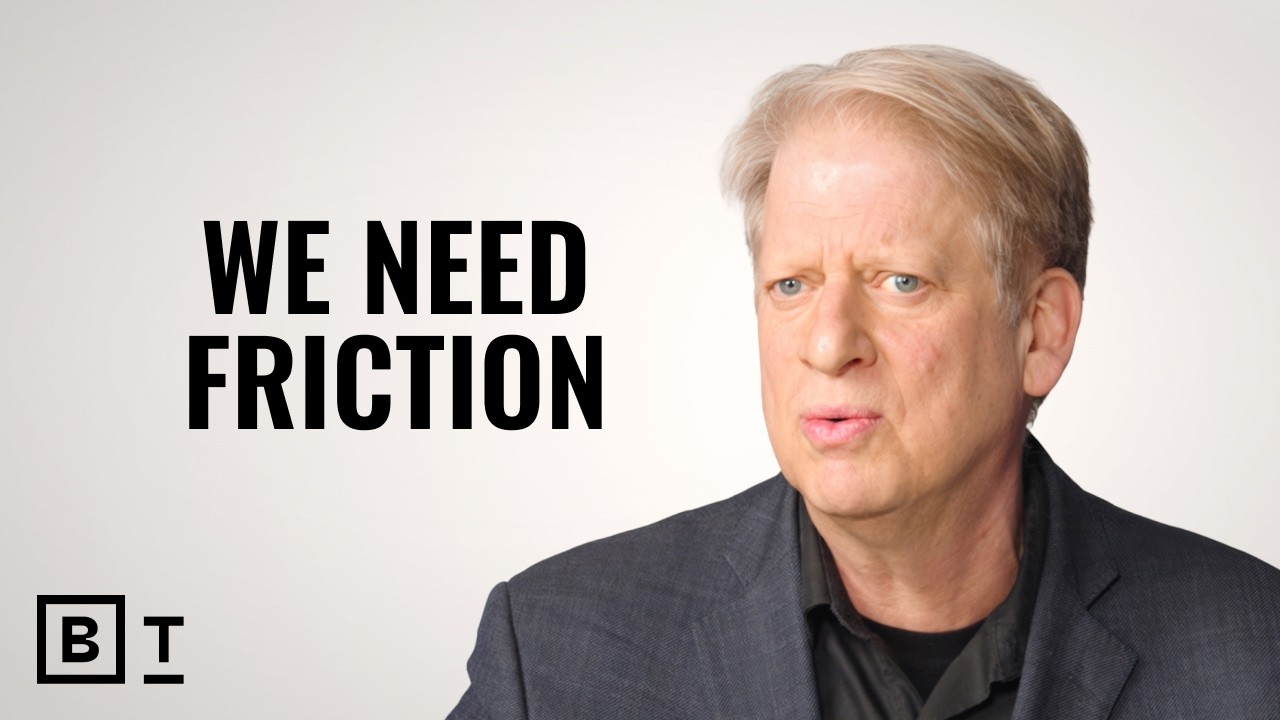
1 in 5 people are unbearably lonely. A psychologist explains | Paul Bloom
Keywords
Summary
205 words
Critical Evaluation
Value of the Information & Strength of the Argument
The value of the information lies in its balanced, nuanced perspective from a leading expert. Bloom does not dismiss AI outright but presents a compelling argument for why human interaction is fundamentally superior, based on the importance of consciousness and social friction for development. The argumentation is solid, built on a clear logical structure: he presents the positive case, then the negative case, and finally a nuanced conclusion. He uses powerful analogies (billionaires, Soylent, painkillers) to make his points accessible and memorable. However, the argument is largely theoretical and based on personal opinion and extrapolation rather than on new empirical data about long-term effects of AI companionship.
Scientific Rigor, Source Quality, Title Accuracy
The scientific rigor is moderate. Bloom references his own research paper ‘In praise of empathic AI’ and mentions other researchers like John Cacioppo and Oliver Burkeman, but does not provide specific citations or data. The quality of sources is high given his academic standing, but the presentation is conversational. The title accurately reflects the content, which is a discussion of loneliness and the role of AI. The video is an opinion piece from an expert, not a peer-reviewed lecture.
201 words
Title / Content Match
The title accurately reflects the core theme of the video, which discusses the prevalence of loneliness and its psychological underpinnings.
Quality & Reliability
8/10
The speaker is a renowned professor of psychology at Yale and Toronto. The content is based on his expertise and references to research, but it is primarily an opinion piece with personal anecdotes and analogies, not a systematic review of the literature.
Key Moments
Markers derived by PSI from the transcript: the creator did not define chapters.
- Introduction of Paul Bloom and his field of study.
- Discussion on the 'solitude epidemic' versus a 'loneliness epidemic'.
- Presentation of the positive case for empathic AI, citing his own research.
- First major worry: AI companions becoming addictive and pulling people away from human interaction.
- Second major worry: the sycophantic nature of AI robs users of social learning and feedback.
- Analogy of billionaires surrounded by yes-men to illustrate the dangers of constant validation.
- Discussion of loneliness as an essential evolutionary signal, like hunger or thirst.
- Acknowledgment of the potential benefits of AI for the elderly and those in extreme pain, using the painkiller analogy.
- Conclusion with the 'Soylent' analogy, positioning AI as a backup, not a substitute, for human connection.
Cited Sources
- Big Think Membership — Link to the channel's membership program, mentioned at the end of the video.
- Paul Bloom's Full Interview — Link to the full interview with Paul Bloom, from which this clip is taken.
Concurring Sources
- The 'Empathic AI' paper by Bloom et al. — This is the research paper Bloom co-authored, which provides the empirical foundation for his claim that AI can be more empathic than humans in short-term interactions.
- John Cacioppo's research on loneliness — Bloom explicitly cites Cacioppo's work to support his argument that loneliness is an evolutionary signal, not a malfunction.
Dissenting Sources
- Derek Thompson's argument against a loneliness epidemic — Bloom references Derek Thompson's argument that there is no loneliness epidemic but rather a solitude epidemic, which challenges the common narrative that loneliness is increasing.
Contribution & Novelties
The video’s original contribution is not new research but a high-profile expert synthesis of the debate around AI companionship. Bloom frames the issue as a trade-off between alleviating suffering and preserving the essential, friction-based nature of human social development. He introduces a compelling framework for evaluating AI companions by comparing them to tools like painkillers (for the suffering) and Soylent (for the general population), which helps clarify the ethical stakes.
Pour aller plus loin :
- The ‘Empathic AI’ paper by Bloom et al. — This is the paper referenced in the video, providing the empirical basis for the claim that AI can outperform humans in short-term empathy studies.
- John Cacioppo’s research on loneliness — The late neuroscientist’s work is foundational to understanding loneliness as a biological signal, a key concept in Bloom’s argument.
- The concept of ‘Soylent’ — The meal replacement drink used as a central analogy to argue that AI is a nutritionally adequate but experientially poor substitute for real human interaction.
163 words
Radar Profile
The radar profile shows a balanced score across all dimensions, with a slight peak in 'qualite_information' and 'fiabilite_globale'. This reflects the video's strength as an expert opinion piece that is well-argued and grounded in the speaker's authority, while being less strong on raw 'quantite_information' and 'niveau_technique' due to its conversational format.
💬 The overall tone is balanced, with a mix of personal anecdotes and thoughtful engagement with the topic. Many commenters share their own experiences with loneliness and AI, while others debate the structural causes of loneliness or the potential benefits of AI companions. Sur les 30 commentaires analysés, le climat est globalement positif et réfléchi, avec une majorité de commentaires exprimant un accord nuancé avec les propos de Bloom.