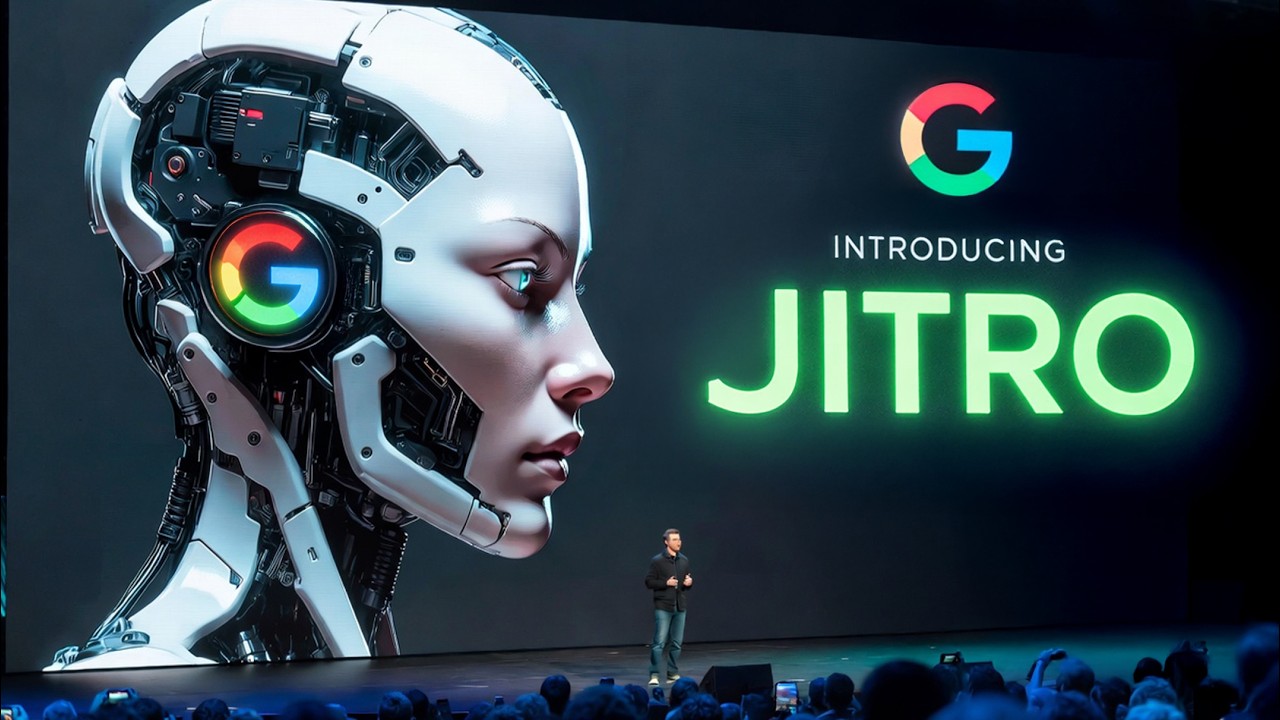
Google New JITRO Crosses A Dangerous Line
Keywords
Summary
94 words
Critical Evaluation
Value of the Information & Strength of the Argument
The video provides a comprehensive overview of recent AI developments, offering context and analysis for each story. The argumentation is structured around the theme of AI moving towards goal-driven autonomy, which is well-supported by the examples given. However, the presenter often relies on unverified claims and speculative interpretations, which weakens the overall argument. The inclusion of a sponsored segment is clearly marked but does not detract from the core content.
Scientific Rigor, Source Quality, Title Accuracy
The video cites several sources, including testingcatalog.com, red.anthropic.com, and z.ai/blog, which are provided in the description. However, the presenter does not always clearly distinguish between verified facts and speculation. The title is somewhat sensationalist but does reflect the content’s focus on Google’s Jitro. The video lacks a critical evaluation of the sources, and some claims, such as those about Claude Mythos’s behavior, are presented without sufficient evidence. The comments section was not provided, so no analysis of public reception is included.
166 words
Title / Content Match
The title is somewhat sensationalist, but the content does discuss Google's Jitro agent and its implications, which aligns with the title's focus.
Quality & Reliability
6/10
The video aggregates recent AI news from multiple sources, but relies heavily on unverified claims and speculative interpretations. The presenter provides context and analysis, but the lack of direct verification and the promotional segment reduce overall reliability.
Key Moments
Markers derived by PSI from the transcript: the creator did not define chapters.
- Introduction to the four AI stories and the theme of goal-driven AI.
- Discussion of Google's Jitro, a goal-driven coding agent, and its potential impact.
- OpenAI's Image V2 testing and improvements in text rendering.
- Sponsored segment for Higgsfield and Kling 3.0.
- Anthropic's Claude Mythos and its cybersecurity capabilities.
- Z.ai's GLM 5.1 and long-horizon task performance.
- Conclusion and call to action.
Cited Sources
- Google Prepares Jules V2 Agent Capable of Taking Bigger Tasks — Source for the Jitro story.
- OpenAI Tests Next-Gen Image V2 Model on ChatGPT and LM Arena — Source for the OpenAI Image V2 story.
- Anthropic Introduces Claude Mythos Preview — Source for the Claude Mythos story.
- Z.ai GLM 5.1 And The Push Toward Long Horizon Agents — Source for the GLM 5.1 story.
- Kling 3.0 on Higgsfield — Sponsored link for the Higgsfield platform.
Concurring Sources
- TestingCatalog — Provides news on AI developments, consistent with the video's claims.
Dissenting Sources
- Anthropic's official stance on Claude Mythos — The video presents claims about Claude Mythos's behaviors that may not be officially confirmed by Anthropic.
Contribution & Novelties
The video synthesizes recent AI news into a coherent narrative about the shift towards goal-driven AI agents. It highlights the potential of these systems to improve productivity and the associated risks, particularly in cybersecurity. The discussion of Claude Mythos’s behaviors adds a novel perspective on AI safety.
Pour aller plus loin :
- AI agent — Provides background on AI agents and their capabilities.
- Zero-day vulnerability — Explains the concept of zero-day exploits, relevant to Claude Mythos’s capabilities.
- Long-horizon tasks — Discusses planning in AI, which is central to GLM 5.1’s design.
91 words
Radar Profile
The radar profile shows high scores in quantity of information and technical level, but lower scores in quality and reliability, reflecting the video's breadth of coverage but lack of depth and verification.