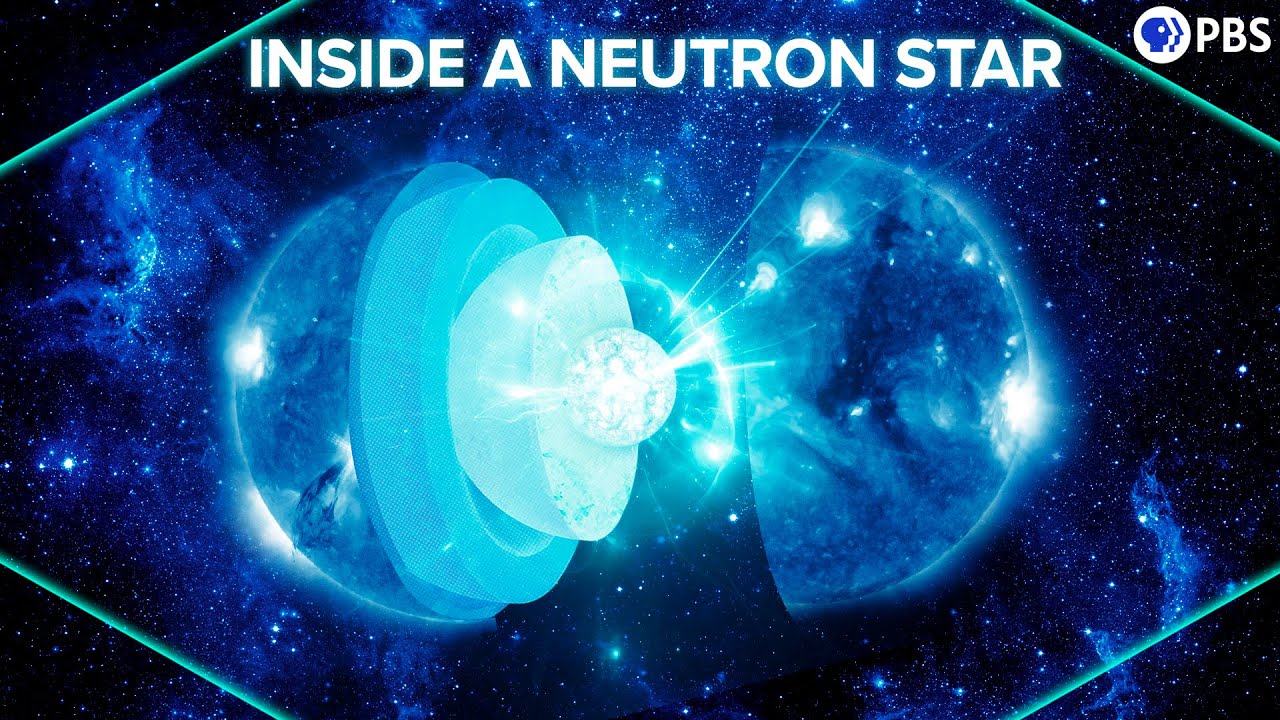
Neutron Stars: The Most Extreme Objects in the Universe
Keywords
Summary
166 words
Critical Evaluation
Value of the Information & Strength of the Argument
The video provides a high-value, comprehensive overview of neutron star interiors, synthesizing a wide range of astrophysical concepts into a coherent narrative. The argumentation is solid, clearly distinguishing between well-established physics (e.g., electron degeneracy pressure, neutron drip) and more speculative states (e.g., quark-gluon plasma, hyperons). The use of a hypothetical journey is an effective pedagogical device, making complex ideas accessible without oversimplifying. The discussion of observational evidence, such as pulsar glitches and gravitational wave searches, grounds the theoretical content in real scientific inquiry.
Scientific Rigor, Source Quality, Title Accuracy
The scientific rigor is high; the content aligns with current astrophysical understanding and the host, Matt O’Dowd, is a credible expert. While no specific papers are cited in the video, the description provides links to the show’s Patreon, merch store, and mailing list, which are not direct scientific sources. The title accurately reflects the content, focusing on the extreme nature of neutron stars. The video’s production quality and clear explanations contribute to its reliability.
172 words
Title / Content Match
The title accurately reflects the content, which focuses on the extreme conditions and exotic states of matter found within neutron stars.
Quality & Reliability
9/10
The video presents a rigorous, well-structured overview of neutron star interiors, grounded in established astrophysical theory (degeneracy pressure, nuclear pasta, superfluidity). It clearly distinguishes between well-established facts and speculative states (hyperons, quark-gluon plasma), and references ongoing observational efforts (LIGO). The host is a known astrophysicist, and the content aligns with current scientific consensus.
Key Moments
Markers derived by PSI from the transcript: the creator did not define chapters.
- Introduction to the journey and the extreme nature of neutron stars.
- Description of the magnetosphere and its role in creating pulsar emissions.
- Landing on the surface and explanation of the crystalline crust and electron degeneracy.
- Tunneling through the outer crust, discussing electron capture and neutron-rich nuclei.
- Entering the inner crust and the phenomenon of neutron drip.
- Exploring the nuclear pasta region, including spaghetti and lasagna phases.
- Reaching the core, discussing superfluidity, superconductivity, and possible quark-gluon plasma.
- Discussion of gravitational wave detection and the potential for observing neutron star mountains.
Cited Sources
- Space Time Patreon — Mentioned in the description as a way to support the show and access the Discord community.
- Space Time Merch Store — Linked in the description for purchasing merchandise.
- Space Time Mailing List — Linked in the description for episode notifications.
- End Credits Music by J.R.S. Schattenberg — Credited for the end credits music.
Concurring Sources
- Neutron star - Wikipedia — Provides a general overview of neutron star structure and properties, consistent with the video's content.
- Nuclear pasta - Wikipedia — Discusses the theoretical phases of nuclear matter, including spaghetti and lasagna, as described in the video.
Contribution & Novelties
The video’s original contribution lies in its vivid, accessible visualization of the interior of a neutron star, synthesizing a wide range of cutting-edge astrophysical research into a single narrative. It effectively communicates the exotic states of matter—from nuclear pasta to superfluids—and connects them to observable phenomena like pulsar glitches and gravitational waves.
Pour aller plus loin :
- Neutron star — Wikipedia article providing a comprehensive overview of neutron star properties and formation.
- Nuclear pasta — Wikipedia article detailing the theoretical phases of nuclear matter at extreme densities.
- Superfluidity — Wikipedia article explaining the phenomenon of frictionless flow, relevant to the neutron star core.
- LIGO — Wikipedia article on the gravitational-wave observatory mentioned in the video.
115 words
Radar Profile
The radar profile shows high scores across all dimensions, indicating a well-balanced and reliable educational video. The slightly lower score in 'niveau_technique' reflects the accessible presentation, but the content remains scientifically accurate and informative.
💬 Très positif. Sur les 30 commentaires analysés, l'enthousiasme est unanime, avec des éloges pour l'animateur, la clarté des explications, et l'humour récurrent sur les 'pâtes nucléaires'.