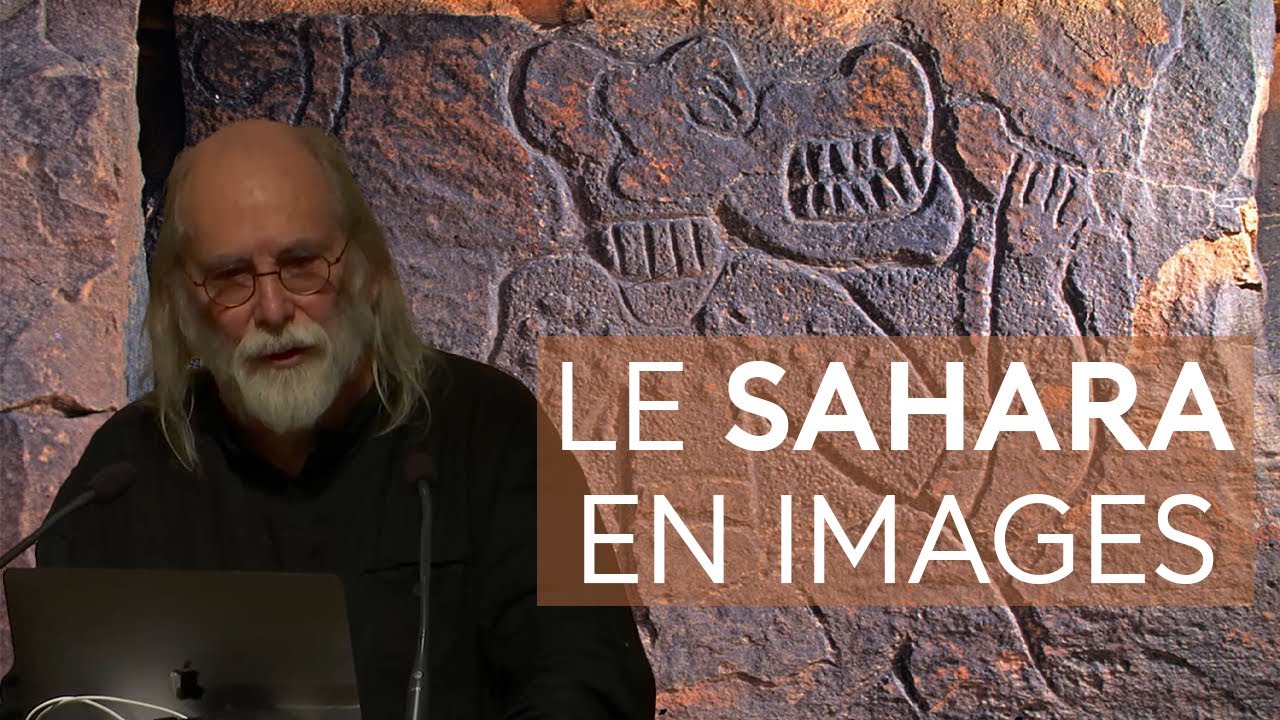
Les images rupestres du Sahara
Rock Art of the Sahara
Keywords
Summary
167 words
Critical Evaluation
Value of the Information & Strength of the Argument
The value of the information lies in the expert synthesis and critical perspective on long-standing theories. Le Quellec effectively demonstrates how unfounded assumptions about migrations, race, and chronology have shaped interpretations, offering a necessary corrective. His argumentation is solid, grounded in historical examples and direct quotations from earlier scholars, though he does not provide a systematic verification of every claim. The lecture is particularly valuable for highlighting the need for interdisciplinary approaches and for questioning inherited biases.
Scientific Rigor, Source Quality, Title Accuracy
The scientific rigor is generally high: the speaker is a recognized specialist and provides detailed historical context. However, the video does not include explicit bibliographic citations on screen; references are given orally through author names (Barth, Monod, Lhote, Breuil) but without formal references. The only provided link is the museum’s event page, which lacks detailed supporting documents. The title perfectly matches the content, which indeed covers a comprehensive survey of Saharan rock art research.
166 words
Title / Content Match
The title accurately reflects the content, which focuses on the history and interpretation of Saharan rock art.
Quality & Reliability
8/10
The speaker is a renowned CNRS researcher in anthropology and prehistory, providing a well-structured historical overview. However, the lecture is an opinion piece and does not systematically provide verifiable bibliographic references for each claim within the video.
Key Moments
Markers derived by PSI from the transcript: the creator did not define chapters.
- Introduction and presentation of the four paradigms to be discussed.
- First published discovery of rock art in North Africa in 1847, and Heinrich Barth's discovery in the Messak in 1850.
- Discussion of the migratory paradigm and theories linking Saharan art to Egyptian or Fulani sources.
- Presentation of the stylistic paradigm by the Abbé Breuil and its impact.
- Critique of the racial paradigm and attempts to attribute ethnic identities to the artists.
- Examination of the stratigraphic paradigm introduced by Théodore Monod and its limitations.
- Conclusion on the incompatibility of existing chronologies and the future perspectives for rock art archaeology.
Cited Sources
- Musée de l'Homme - Les images rupestres du Sahara — Page officielle de la conférence présentant l'événement et le conférencier.
Contribution & Novelties
The main novelty is the critical reassessment of four research paradigms that have long influenced Saharan rock art studies, offering a fresh perspective on how to interpret these images. Le Quellec calls for an archaeology based on the images themselves rather than on unfounded cultural attributions.
Pour aller plus loin :
- Rock art — General introduction to rock art, including Saharan examples.
- Tassili n’Ajjer — Major rock art site in the Sahara, central to the discussed frescoes.
- Heinrich Barth — The explorer who documented the first central Saharan rock art in 1850.
- Théodore Monod — Naturalist and geologist who proposed the stratigraphic paradigm.
103 words
Radar Profile
The radar profile shows very high scores for information quantity, quality, and global reliability, with a slightly lower technical level, reflecting a lecture that is scientifically robust yet accessible to a general audience.