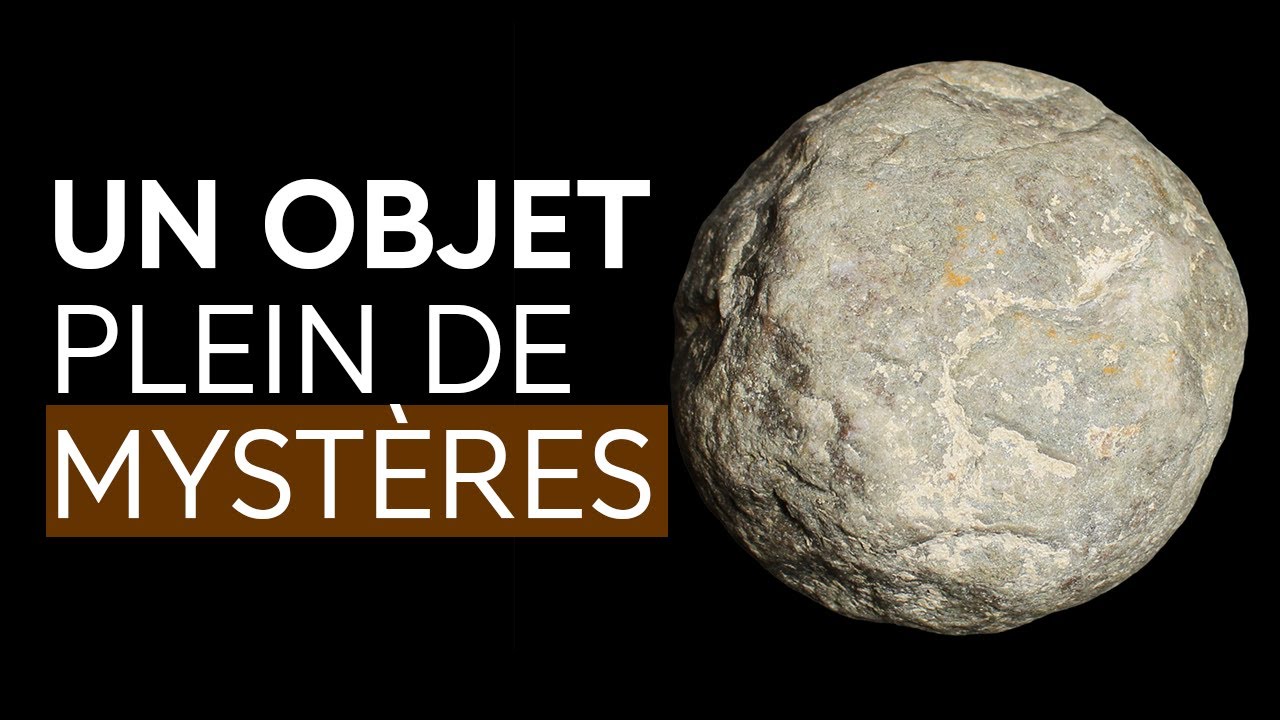
Les sphéroïdes : des objets préhistoriques énigmatiques
Spheroids: enigmatic prehistoric objects
Keywords
Summary
183 words
Critical Evaluation
Value of the Information & Strength of the Argument
The presentation provides valuable insights into a poorly understood category of prehistoric artifacts. The argumentation is solid, based on a combination of archaeological data, experimental archaeology, and use-wear analysis. The speaker systematically presents her methodology, results, and interpretations, carefully distinguishing between observed evidence and hypotheses. The use of experimental reference collections to interpret archaeological traces is a rigorous approach that strengthens the validity of the functional interpretations. The discussion of the ‘production paradox’ (complex manufacturing for a function that could be fulfilled by a simple pebble) is particularly thought-provoking and opens avenues for further research, including non-functional explanations.
Scientific Rigor, Source Quality, Title Accuracy
The scientific rigor is high, with a clear presentation of the research design, methods, and results. The speaker cites specific sites and studies, and the conference is part of a recognized academic event. The title accurately reflects the content, focusing on the enigmatic nature of these objects. The presentation includes a discussion of the historical context of lithic studies, referencing key figures like Semenov, Bordes, and Leroi-Gourhan, which adds depth and credibility. The speaker also acknowledges limitations, such as the lack of context for some collections, and calls for caution in interpreting similarities between regions.
208 words
Title / Content Match
The title accurately reflects the content, which focuses on the enigmatic nature of spheroids and the research aimed at understanding them.
Quality & Reliability
8/10
The presentation is based on a doctoral thesis, combining archaeological analysis, experimental replication, and use-wear analysis. The methodology is rigorous and well-documented, with clear presentation of results and cautious interpretation. The speaker is a PhD candidate supervised by a recognized specialist, and the talk is part of a prize ceremony, indicating peer recognition.
Key Moments
Markers derived by PSI from the transcript: the creator did not define chapters.
- Introduction and acknowledgments
- Definition of PSBs and their significance
- Research questions and methodology overview
- Statistical analysis of 169 sites and raw material selection
- Technological analysis and experimental replication
- Use-wear analysis and experimental reference collection
- Results from French sites: La Noira, Tourville-la-Rivière, and southwestern France
- Results from North African sites: Ain el Hallouf, Sidi Abderrahmane, and Aïn Hanech
- Discussion: PSBs as shaped tools, not cores; functional hypotheses; regional similarities
- Conclusion and future research directions
Cited Sources
- Les sphéroïdes : des objets préhistoriques énigmatiques - Musée de l'Homme — Official page of the conference, providing additional information and context.
Concurring Sources
- Musée de l'Homme - Les sphéroïdes — The official page of the conference, which likely contains a summary and possibly additional resources.
Contribution & Novelties
This research provides a comprehensive and integrative study of PSBs, combining technological, use-wear, and experimental approaches. It challenges the traditional view of PSBs as mere exhausted cores, proposing instead that they were intentionally shaped tools. The creation of an experimental reference collection for use-wear analysis is a significant contribution, as few such studies exist. The study also highlights regional patterns and potential cultural connections between southwestern Europe and North Africa, offering new avenues for understanding hominin behavior and cultural transmission.
Pour aller plus loin :
- Spheroids (archaeology) - Wikipedia — Provides general background on spheroids and related artifacts.
- Use-wear analysis - Wikipedia — Explains the methodology of use-wear analysis, central to this study.
- Experimental archaeology - Wikipedia — Discusses the role of experimentation in archaeological research, as used in this study.
131 words
Radar Profile
The radar profile shows high scores across all dimensions, indicating a well-rounded and reliable presentation. The high scores in 'quantite_information' and 'qualite_information' reflect the comprehensive coverage and solid data, while 'niveau_technique' and 'fiabilite_globale' are also high, demonstrating the advanced methodology and trustworthy conclusions.