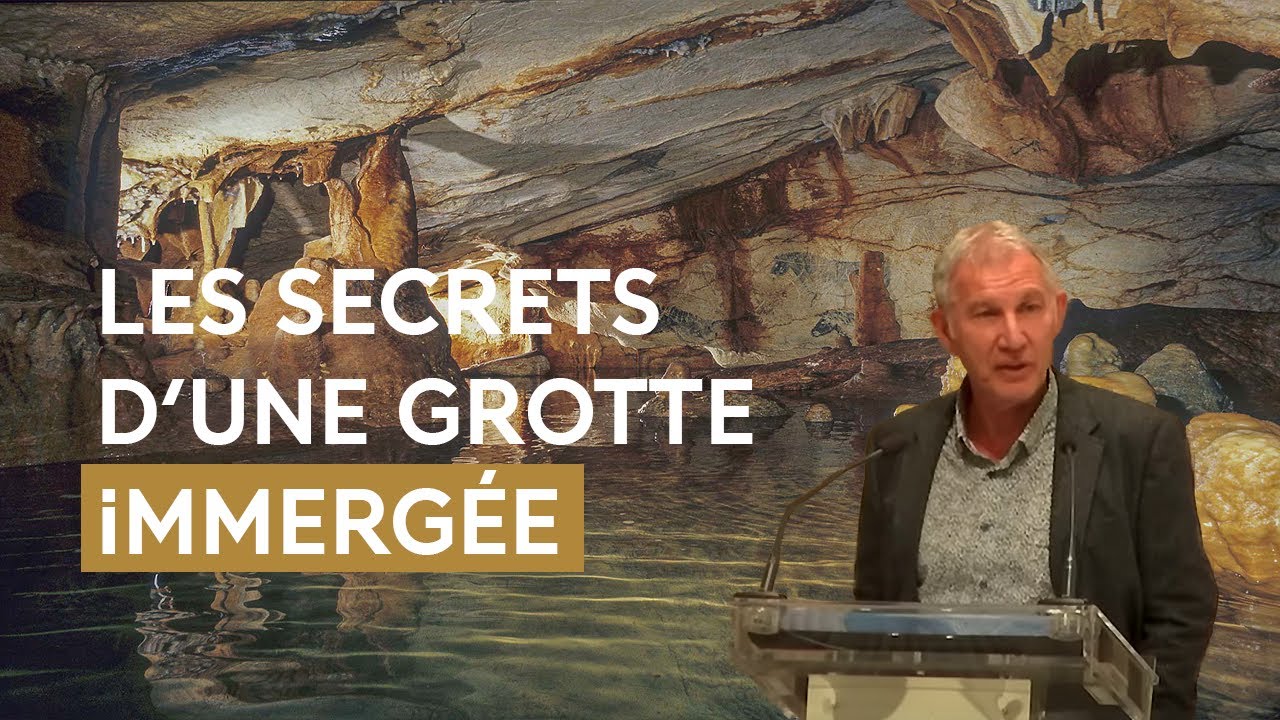
La grotte Cosquer et les sociétés paléolithiques en Méditerranée
The Cosquer Cave and Paleolithic Societies in the Mediterranean
Keywords
Summary
237 words
Critical Evaluation
Value of the Information & Strength of the Argument
The lecture provides valuable insights into the Cosquer cave and its implications for understanding Paleolithic societies. Bracco’s argumentation is solid, grounded in his direct involvement in the research and his expertise in the region. He effectively challenges the traditional Franco-Cantabrian-centric view by presenting evidence from the Mediterranean, including the cave’s unique artistic features and the presence of marine species. The discussion of dating and the complexities of interpreting the cave’s occupation history adds depth to the argument. However, some points, such as the interpretation of the saiga antelope representations, are presented as open questions, which is appropriate for ongoing research. Overall, the value lies in its contribution to a more nuanced understanding of prehistoric art and societies in the Mediterranean.
Scientific Rigor, Source Quality, Title Accuracy
The presentation demonstrates scientific rigor, with Bracco referencing his own research and the work of colleagues. He mentions specific findings, such as the number of graphic entities and the dating results, which are consistent with published literature. The quality of sources is high, as he is a leading expert in the field. The title accurately reflects the content, focusing on the Cosquer cave and its broader context. The talk does not explicitly cite external sources, but the information is based on established archaeological research. The audience’s questions, if any, were not provided, so no analysis of public reception is included.
235 words
Title / Content Match
The title accurately reflects the content, which focuses on the Cosquer cave and its implications for understanding Paleolithic societies in the Mediterranean.
Quality & Reliability
8/10
The conference is delivered by a recognized professor of prehistory, based on current research and direct involvement in the study of the Cosquer cave. The information is consistent with established archaeological knowledge, though some interpretations remain open to debate.
Key Moments
Markers derived by PSI from the transcript: the creator did not define chapters.
- Introduction to the conference and the context of the exhibition 'Art et Préhistoire'.
- Presentation of the Cosquer cave's location and its submersion history.
- Overview of the cave's graphic entities, including paintings, engravings, and hand stencils.
- Discussion of the cave's dating and the complexity of its occupation history.
- Comparison with other Mediterranean sites, particularly in Italy, and the significance of the Epigravettian culture.
- Examination of archaeological remains, such as flint tools and hearths, indicating human activities.
- Discussion of the saiga antelope representations and their chronological implications.
- Conclusion and outlook on ongoing research and future discoveries.
Cited Sources
- Musée de l'Homme - Art et Préhistoire exhibition — Mentioned as a resource for further information about the exhibition and related content.
Concurring Sources
- Cosquer Cave - Wikipedia — Provides general information about the cave, consistent with the lecture's content.
Contribution & Novelties
The lecture provides a comprehensive overview of the Cosquer cave, emphasizing its importance in reshaping the understanding of Paleolithic societies in the Mediterranean. Bracco highlights the cave’s unique features, such as the representation of marine animals and the high number of hand stencils, which distinguish it from other decorated caves. He also discusses the ongoing research and the potential for new discoveries, contributing to the field’s evolving knowledge.
Pour aller plus loin :
- Cosquer Cave - Wikipedia — Provides a general overview and context.
- Epigravettian - Wikipedia — Relevant to the cultural context discussed.
- Rock art - Britannica — General reference on rock art.
104 words
Radar Profile
The radar profile shows high scores in quantity and quality of information, as well as technical level, reflecting the expert nature of the lecture. The overall reliability is also high, indicating a trustworthy source. The lower score in 'fiabilite_globale' compared to others is not significant, as it remains high.