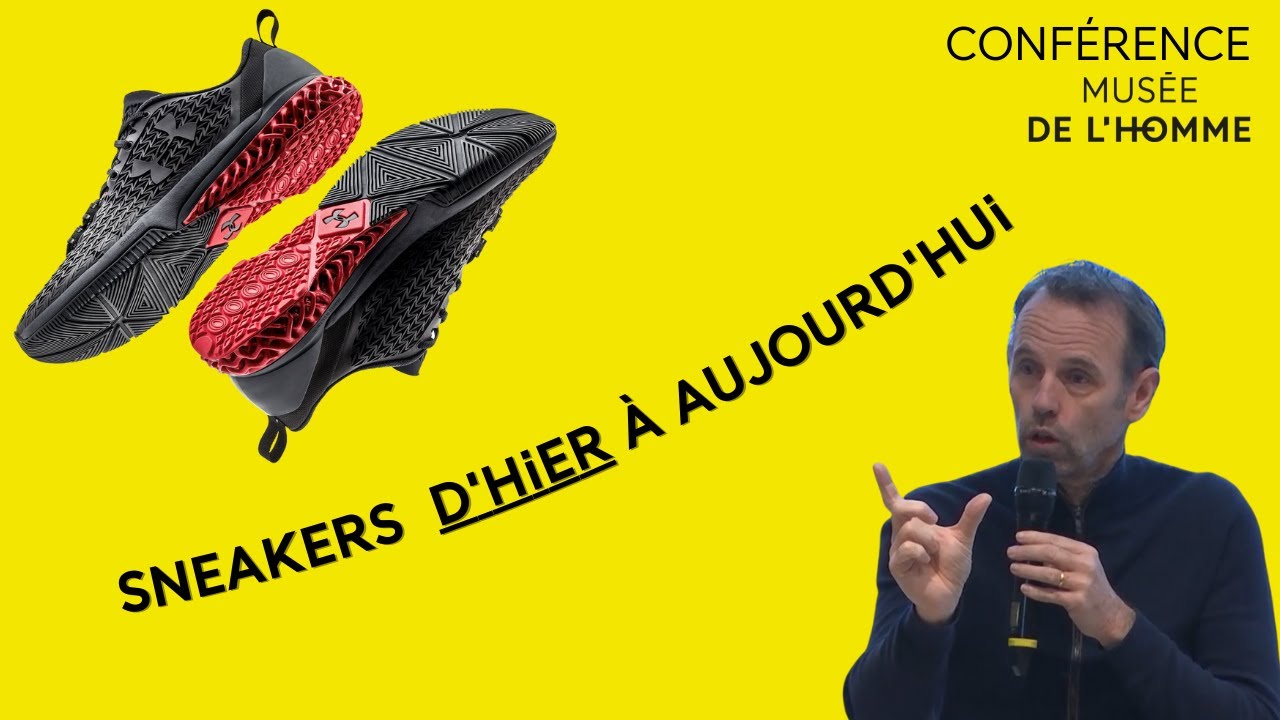
Anatomie, confort, mode : la grande histoire des sneakers
Anatomy, comfort, fashion: the great history of sneakers
Keywords
Summary
162 words
Critical Evaluation
Value of the Information & Strength of the Argument
The value of the information lies in its interdisciplinary approach, combining evolutionary biology with industry insights. The argumentation is solid, particularly in the scientific segment, where Berillon presents evidence from fossil records and comparative anatomy. The cultural segment, while less rigorous, offers a well-informed perspective on marketing strategies. The speakers effectively support their claims with specific examples and references to research.
Scientific Rigor, Source Quality, Title Accuracy
The scientific rigor is high, with references to peer-reviewed studies and archaeological findings. The sources cited are credible, including the work of Erik Trinkaus and the Cussac cave footprints. The title accurately reflects the content, covering both anatomical and cultural aspects. The conference is well-structured, though the cultural part is more anecdotal than scientific.
130 words
Title / Content Match
The title accurately reflects the content, covering anatomical, comfort, and fashion aspects of sneakers.
Quality & Reliability
8/10
The conference is presented by a palaeoanthropologist from CNRS/MNHN and a sports industry expert, providing a dual perspective. The scientific content is based on established research and direct evidence, though some claims are simplified for a general audience.
Key Moments
Markers derived by PSI from the transcript: the creator did not define chapters.
- Introduction by Gilles Berillon on the palaeoanthropological perspective
- Discussion on the anatomy of the human foot and its evolution
- Evidence of early footwear and the impact on foot structure
- Jean Leclercq introduces the cultural and commercial history of sneakers
- The role of 'promises' in sneaker marketing and iconic models like Air Jordan
- Discussion on the evolution of sneakers from performance to fashion
- Conclusion and Q&A session
Cited Sources
- Musée de l'Homme - Agenda — List of upcoming conferences at the museum
- Exposition Sneakers — Details of the exhibition referenced in the conference
Concurring Sources
- Trinkaus, E. (2005) - Anatomical evidence for the antiquity of human footwear — Study on the robustness of foot phalanges as indirect evidence of early footwear.
Contribution & Novelties
The conference provides a unique synthesis of evolutionary biology and sneaker culture, highlighting the long history of the human foot and the relatively recent advent of footwear. It also raises important questions about the compatibility of modern shoe design with natural foot variability.
Pour aller plus loin :
- Bipedalism — Overview of bipedal locomotion in humans and other primates.
- Evolution of the human foot — Detailed information on the anatomical evolution of the foot.
- Sneakers — History and cultural significance of sneakers.
82 words
Radar Profile
The radar profile shows high scores in information quantity and quality, with a moderate technical level. This indicates a well-balanced conference that is informative and credible, but not overly technical, making it accessible to a general audience.