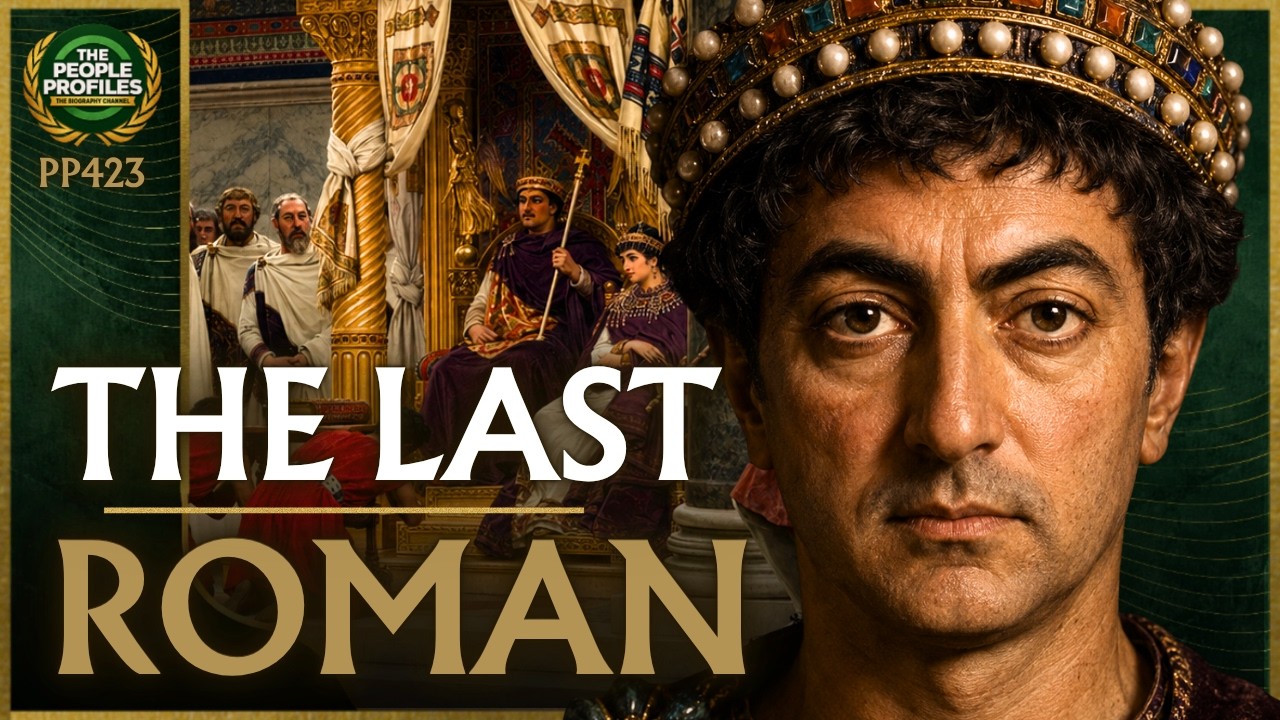
Justinian - The Emperor Who Reconquered Rome Documentary
Keywords
Summary
153 words
Critical Evaluation
Value of the Information & Strength of the Argument
The documentary provides a comprehensive and well-structured overview of Justinian’s reign, synthesizing a wide range of historical events and figures. It offers valuable insights into the political, legal, and religious dimensions of the Byzantine Empire. The argumentation is solid, presenting a balanced view of Justinian’s achievements and failures, and it effectively uses primary sources like Procopius to support its narrative. The inclusion of modern scholarly perspectives, such as those of Peter Sarris, adds depth and credibility. The documentary excels in explaining complex topics like the Nika riots and the codification of Roman law in an accessible yet detailed manner.
Scientific Rigor, Source Quality, Title Accuracy
The documentary demonstrates strong scientific rigor, relying on established historical scholarship and primary sources. The channel’s claim that scripts are researched by qualified historians and checked for plagiarism adds to its credibility. However, the lack of explicit in-video citations or a bibliography limits the viewer’s ability to verify specific claims. The title accurately reflects the content, focusing on Justinian’s reconquest of Rome, and the documentary delivers on this promise. The description mentions that scripts are checked with plagiarism and AI detectors, which is a positive indicator of originality.
202 words
Title / Content Match
The title accurately reflects the content, which focuses on Justinian's life and his reconquest of Rome.
Quality & Reliability
8/10
The documentary is produced by a channel that claims scripts are researched and written by qualified historians and checked with plagiarism/AI detectors. The narrative is detailed and aligns with established historical scholarship, though it lacks explicit citations within the video itself.
Key Moments
Markers derived by PSI from the transcript: the creator did not define chapters.
- Introduction to Justinian and the Nika riots
- Justinian's early life and rise to power
- The reign of Emperor Justin and Justinian's adoption
- Justinian's accession and early conflicts with Persia
- The Nika riots and their aftermath
- The codification of Roman law
- The reconquest of North Africa
- The reconquest of Italy and the Gothic War
- The building of Hagia Sophia and other monuments
- The Plague of Justinian and later reign
- Justinian's legacy and conclusion
Cited Sources
- The People Profiles on Spotify — The channel's podcast version of the documentary.
- Related videos playlist — Playlist of related historical documentaries.
- Related videos playlist — Playlist of related historical documentaries.
- Related videos playlist — Playlist of related historical documentaries.
Concurring Sources
- Justinian I - Wikipedia — Provides a general overview that aligns with the documentary's narrative.
- Procopius - Wikipedia — The primary source cited in the documentary; his works are key to understanding Justinian's reign.
Dissenting Sources
- Justinian's birthplace - scholarly debate — The documentary mentions a debate about Justinian's birthplace, with some sources suggesting Tauresium near Skopje and others near Niš. This is a minor point of historical contention.
Contribution & Novelties
The documentary provides a comprehensive and engaging synthesis of Justinian’s reign, making it accessible to a general audience while maintaining historical accuracy. It effectively weaves together political, military, legal, and religious aspects, offering a holistic view of the emperor and his era. The use of primary sources like Procopius and modern scholarship adds depth. The documentary’s strength lies in its clear narrative structure and attention to detail, which helps viewers understand the complexities of the Byzantine Empire.
Pour aller plus loin :
- Justinian I - Wikipedia — For a comprehensive overview of Justinian’s life and reign.
- Corpus Juris Civilis - Wikipedia — To explore the legal codification that is a central theme of the documentary.
- Nika riots - Wikipedia — For more details on the pivotal uprising that nearly toppled Justinian.
- Hagia Sophia - Wikipedia — To learn about the architectural masterpiece built under Justinian.
145 words
Radar Profile
The radar profile shows high scores in quantity and quality of information, indicating a content-rich and well-researched documentary. The technical level is moderate, making it accessible to a broad audience. Overall reliability is strong, supported by the channel's stated research standards.