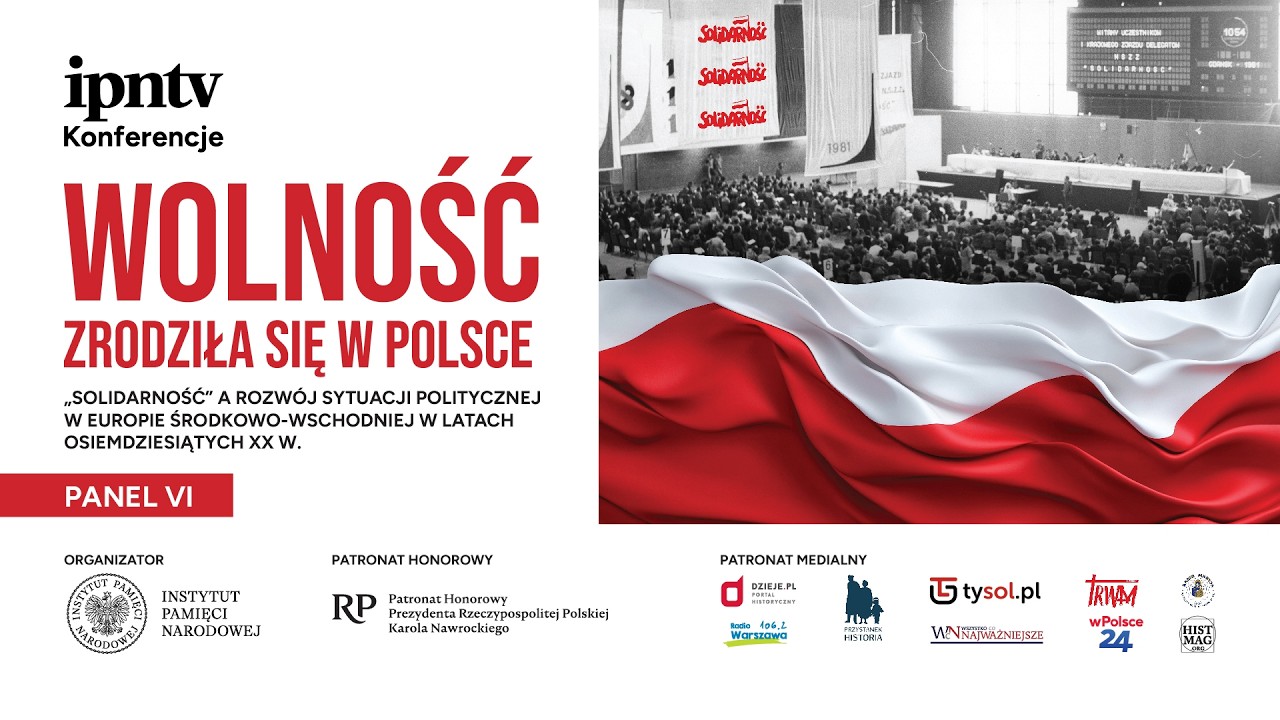
PANEL VI
Keywords
Summary
174 words
Critical Evaluation
Value of the Information & Strength of the Argument
The video provides valuable historical information based on archival research, offering detailed accounts of specific events and their contexts. The presentations are well-structured and supported by evidence from archives and personal accounts. The argumentation is solid, with each speaker presenting a clear thesis and supporting it with specific examples. The discussion of the Japan visit, for instance, includes analysis of the motivations of different actors and the impact of the visit on Solidarity’s international standing. The presentation on Andrzej Słowik’s mission provides insights into the internal debates within Solidarity about its identity and strategy. The overall argumentation is coherent and persuasive, though it is presented in a formal academic style.
Scientific Rigor, Source Quality, Title Accuracy
The scientific rigor is high, as the presentations are based on archival research and the speakers are historians with relevant expertise. The sources cited are primarily archival documents and personal accounts, which are appropriate for historical analysis. The title ‘PANEL VI’ is generic and does not reflect the specific content, but it is part of a conference series. The content is well-aligned with the title in the sense that it is a panel discussion, but the title lacks descriptive detail. The video is a recording of a conference, so the quality of sources is inherent to the academic context.
224 words
Title / Content Match
The title 'PANEL VI' is generic and does not convey the specific topic of the international dimension of Solidarity, but it is consistent with the conference series.
Quality & Reliability
8/10
The video is a recording of an academic conference panel organized by the Polish Institute of National Remembrance (IPN), featuring three presentations by historians with doctoral degrees. The content is based on archival research and scholarly analysis, with a clear academic structure. The panel is part of a scientific conference, and the speakers are identified with their institutional affiliations, lending credibility. However, the video has very low viewership and no engagement, and the content is not peer-reviewed in this format.
Chapters
- Wizyta delegacji NSZZ „Solidarność” w Japonii w 1981 r. jako przejaw międzynarodowej
- Nielegalny pobyt Andrzeja Słowika na Zachodzie w kontekście starań o afiliację NSZZ
- Kontakty opozycji solidarnościowej z przedstawicielami Zachodu na terenie PRL w latach osiemdziesiątych XX w.: dr Monika Komaniecka-Łyp (Oddziałowe Biuro Badań Historycznych IPN w Krakowie)
- dyskusja
Cited Sources
- Conference playlist — The playlist contains other panels from the same conference, providing additional context and related presentations.
Concurring Sources
- Solidarity (Polish trade union) — Provides general background on Solidarity and its international activities, consistent with the video's content.
Contribution & Novelties
The video offers a detailed, scholarly examination of the international activities of Solidarity, particularly the Japan visit and the mission of Andrzej Słowik, which are not widely covered in mainstream media. It provides new insights into the internal debates within Solidarity about its identity and strategy, and the role of international contacts in strengthening the movement. The presentations are based on archival research, offering a nuanced understanding of the complexities of Solidarity’s international engagement.
Pour aller plus loin :
- Solidarity (Polish trade union) — Provides background on the Solidarity movement and its history.
- International Confederation of Free Trade Unions — Relevant to the discussion of affiliation with international trade union bodies.
- World Confederation of Labour — Another international trade union confederation mentioned in the context of affiliation efforts.
128 words
Radar Profile
The radar profile shows high scores in information quantity, quality, and reliability, with a slightly lower score in technical level, reflecting the advanced academic nature of the content. The video is a rich source of historical information, but its technical complexity may limit accessibility to a general audience.