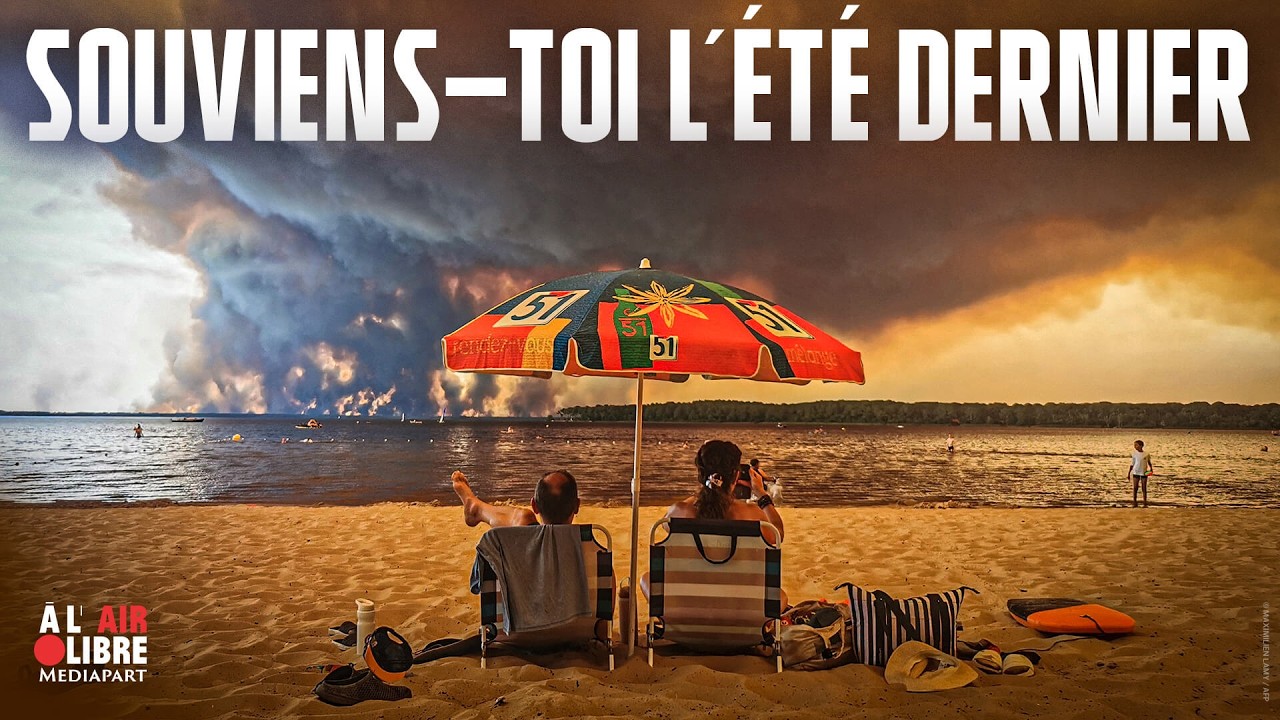
Après l’été caniculaire : « c’est le moment d’arracher notre droit à vivre »
After the scorching summer: "it's time to claim our right to live"
Keywords
Summary
137 words
Critical Evaluation
Value of the Information & Strength of the Argument
The video provides valuable firsthand accounts and expert opinions that illustrate the real-world impacts of climate change. The argumentation is strong in its emotional appeal and the credibility of the speakers, but it is primarily advocacy-driven rather than a balanced scientific analysis. The guests present a coherent case for urgent action, but the discussion lacks opposing viewpoints, which could strengthen the argumentation by addressing potential counterarguments.
Scientific Rigor, Source Quality, Title Accuracy
The video references scientific reports (e.g., IPCC, Santé publique France) and includes links to Mediapart articles in the description, which adds credibility. However, specific data points are often cited without direct sources, and the reliance on personal testimonies, while powerful, is not a substitute for rigorous scientific evidence. The title accurately reflects the content, and the video is well-structured, but the lack of diverse perspectives limits its scientific rigor.
150 words
Title / Content Match
The title accurately reflects the content, which focuses on the aftermath of a record-hot summer and the call for political action.
Quality & Reliability
7/10
The video features credible experts (paleoclimatologist, NGOs, firefighters, victims) and references scientific reports, but relies heavily on personal testimonies and political advocacy, with limited direct citation of specific studies.
Key Moments
Markers derived by PSI from the transcript: the creator did not define chapters.
- Introduction of the program and guests.
- Jean Jouzel discusses the predictability of extreme events.
- Testimony of Ludivine Dornac about losing her house.
- Firefighter Stéphane Le Cir highlights lack of resources.
- Discussion on climate refugees and the Oxfam counter.
- Benoît Biteau criticizes the government's response.
- Call for mobilization and the upcoming climate march.
Cited Sources
- « Je suis inconsolable » : après un été cataclysmique, paroles de militants écologistes consternés — Article referenced in the video description, providing testimonies from activists.
- Troisième pic caniculaire : des risques accrus, un bricolage permanent — Article referenced in the video description, discussing the third heatwave.
- Canicules : catastrophes à répétition (dossier) — Dossier referenced in the video description, compiling articles on heatwaves.
Concurring Sources
- IPCC Sixth Assessment Report — Scientific consensus on climate change impacts.
- Santé publique France heatwave surveillance — Data on heat-related mortality in France.
Dissenting Sources
- Climate change skepticism — The video does not include skeptical viewpoints, which could be considered a limitation in a balanced discussion.
External References
Contribution & Novelties
The video contributes to the public discourse by bringing together diverse voices—scientists, victims, firefighters, and activists—to discuss the immediate impacts of climate change in France. It highlights the human cost and the inadequacy of current policies, which is a valuable perspective often missing in mainstream media. The call for a ‘climate victims’ counter and the emphasis on the upcoming march are novel angles.
Pour aller plus loin :
- IPCC Reports — The scientific basis for climate projections and impacts.
- Santé publique France — Source for heatwave mortality data.
- Oxfam France — Organization behind the climate victims counter and advocacy.
99 words
Radar Profile
The radar profile shows high scores in information quantity and quality, reflecting the rich content and expert input. The technical level is moderate, making it accessible to a general audience. The overall reliability is good, but the advocacy nature and lack of counterpoints slightly reduce the score.
💬 No comments were provided for analysis.