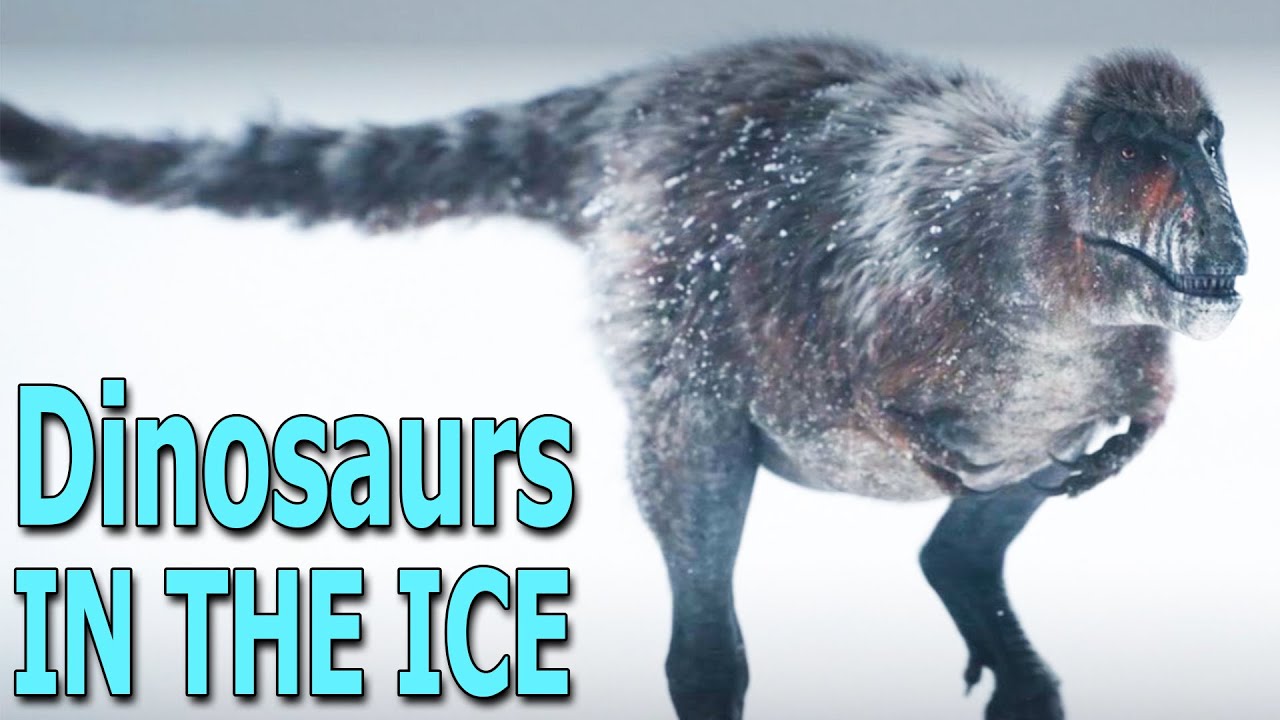
The Polar Dinosaurs That Ruled Prehistoric Earth | BoneHeads
Keywords
Summary
112 words
Critical Evaluation
Value of the Information & Strength of the Argument
The video provides substantial value by synthesizing recent paleontological research on polar dinosaurs, a niche but important topic. The hosts, who are knowledgeable in the field, present information from peer-reviewed sources and clearly distinguish between established facts and speculative interpretations. For example, they discuss the potential dwarf status of Nanoxaurus, noting the limited material and the existence of undescribed larger remains, thus avoiding overstatement. The argumentation is generally solid, with claims backed by cited studies, though some discussions are informal and exploratory, reflecting the conversational format.
Scientific Rigor, Source Quality, Title Accuracy
The scientific rigor is high, as the hosts cite numerous peer-reviewed papers, including those on troodontid teeth, Pachyrhinosaurus growth, and Antarctic sauropods. The sources are credible and directly relevant to the topics discussed. The title accurately reflects the content, which focuses on polar dinosaurs and associated marine reptiles. The video’s ad hoc format, with occasional tangents, does not detract from the overall scientific accuracy. The hosts also mention the presence of a sponsor segment, which is not evaluated in the scoring.
182 words
Title / Content Match
The title accurately reflects the content, which focuses on dinosaurs and marine reptiles that lived in polar regions.
Quality & Reliability
8/10
The video is a panel discussion among paleontologists, grounded in peer-reviewed literature, with direct citations to scientific papers. The content is accurate and up-to-date, though some speculative elements are clearly flagged.
Chapters
Cited Sources
- On the Occurrence of Exceptionally Large Teeth of Troodon (Dinosauria: Saurischia) from the Late Cretaceous of Northern Alaska — Discussed in relation to large troodontid teeth from Alaska.
- A new dromaeosaurid from the Late Cretaceous of Alaska — Referenced when discussing dromaeosaurid remains from the Prince Creek Formation.
- Pachyrhinosaurus perotorum, a new species of centrosaurine ceratopsid from the Prince Creek Formation — Mentioned as the description of the Alaskan Pachyrhinosaurus species.
- Growth and variation in the skull of Pachyrhinosaurus perotorum — Cited for the juvenile specimen and growth stages of Pachyrhinosaurus.
- A new hadrosaurid from the Prince Creek Formation — Referenced when discussing the hadrosaur material from Alaska.
- Re-evaluation of the Alaskan hadrosaur — Used to discuss the reassignment of the Alaskan hadrosaur to Edmontosaurus.
- A new Edmontosaurus specimen from Alaska — Mentioned in the context of recent Edmontosaurus research.
- Arthropterygius, a new ichthyosaur from the Arctic — Discussed in the section on Arctic ichthyosaurs.
- Undorosaurus, a new ichthyosaur from the Arctic — Referenced when discussing Arctic ichthyosaurs.
- Nannopterygius, a new ichthyosaur from the Arctic — Mentioned in the context of Arctic ichthyosaurs.
- Ichthyosaurs from the Upper Triassic of the New Siberian Islands — Referenced when discussing Auroroborealia and Arctic ichthyosaurs.
- Growth patterns in polar dinosaurs — Cited when discussing growth rates in polar dinosaurs.
- Muttaburrasaurus, a new ornithopod from Australia — Mentioned in the Australian dinosaurs section.
- Trinisaura, a new ornithopod from Antarctica — Referenced when discussing Antarctic dinosaurs.
- Kunbarrasaurus, a new ankylosaur from Australia — Discussed in the section on Kunbarrasaurus.
- First record of a sauropod from Antarctica — Cited when discussing Antarctic sauropod remains.
- Fragmentary Antarctic theropod bone — Referenced when discussing Antarctic theropod material.
- Arctic ice and the ecological rise of the dinosaurs — Mentioned in the final section about Arctic ice and dinosaur ecology.
Concurring Sources
- Pachyrhinosaurus perotorum description — Supports the discussion of the Alaskan Pachyrhinosaurus species.
- Growth in polar dinosaurs — Aligns with the discussion of growth patterns in polar dinosaurs.
Dissenting Sources
- Nanoxaurus size debate — The hosts note that some undescribed material suggests Nanoxaurus may not be a dwarf, contradicting the initial description.
Contribution & Novelties
The video provides a comprehensive overview of polar dinosaur research, synthesizing recent discoveries and discussing their implications for understanding dinosaur adaptation to extreme environments. It highlights the unique faunas of the Prince Creek Formation and Antarctic sites, and discusses potential mechanisms like Bergmann’s rule and seasonal light cycles. The hosts also address ongoing debates, such as the validity of Nanoxaurus as a dwarf species.
Pour aller plus loin :
- Bergmann’s rule — Relevant to the discussion of larger body sizes in polar troodontids.
- Prince Creek Formation — Geological context for the Alaskan dinosaurs discussed.
- Pachyrhinosaurus — Background on the genus and its species.
103 words
Radar Profile
The radar profile shows high scores in information quantity and quality, reflecting the video's comprehensive coverage and reliance on peer-reviewed sources. The technical level is moderate, accessible to a general audience but with scientific depth. Overall reliability is strong, with minor caveats about speculative elements.
💬 Sur les 0 commentaires analysés, aucune tendance n'est disponible.