The Scientific Accuracy of Walking With Dinosaurs - Episode 5: Spirits of the Ice Forest
Keywords
Summary
232 words
Critical Evaluation
Value of the Information & Strength of the Argument
The video provides substantial value by offering a detailed, up-to-date scientific critique of a popular documentary. The argumentation is solid, as the author consistently supports his claims with references to specific scientific studies and expert opinions. He clearly distinguishes between established facts, plausible hypotheses, and speculative reconstructions, and acknowledges uncertainties. The reasoning is logical and well-structured, following a systematic review of each species. The author also provides context for the inaccuracies, explaining that they reflect the state of knowledge in the 1990s.
Scientific Rigor, Source Quality, Title Accuracy
The video demonstrates high scientific rigor. The author cites numerous peer-reviewed papers, books, and other reliable sources, and he is careful to attribute claims to their original researchers. He also acknowledges the limitations of the fossil record and the speculative nature of some reconstructions. The title accurately reflects the content, which is a focused analysis of the scientific accuracy of the episode. The video is well-researched and provides a balanced assessment, noting both strengths and weaknesses of the documentary.
176 words
Title / Content Match
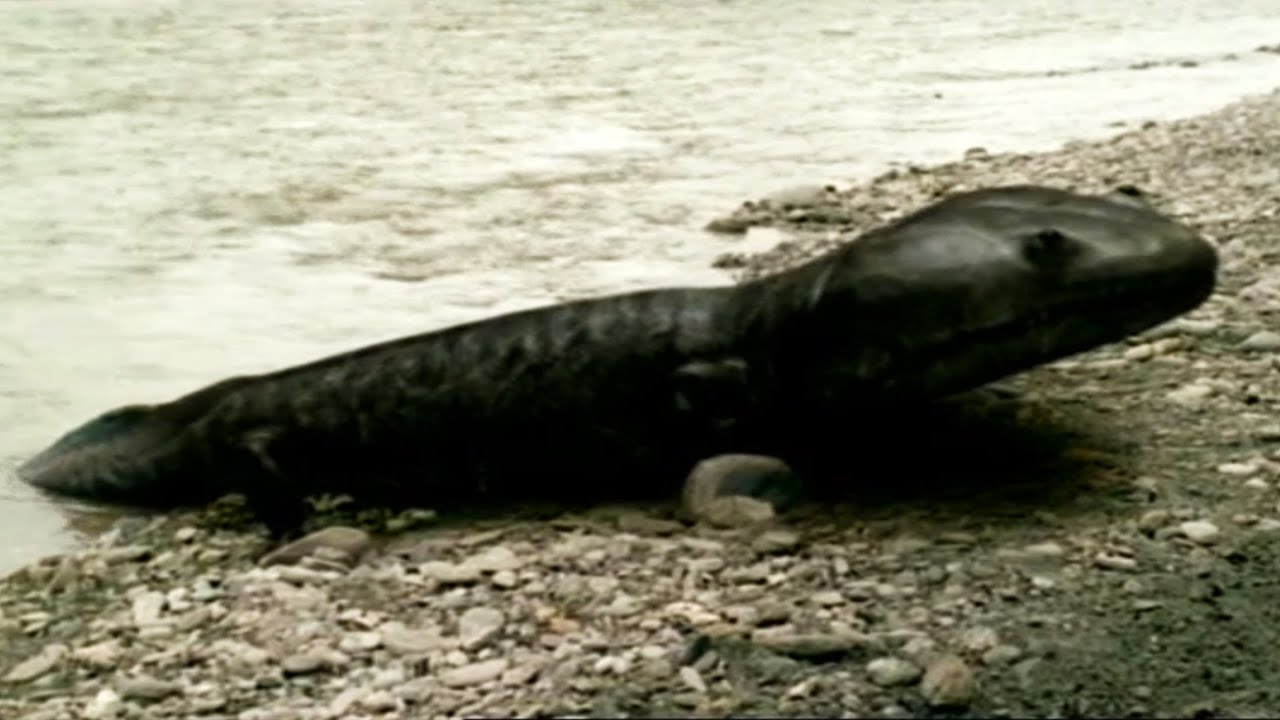
The title accurately reflects the content: a detailed analysis of the scientific accuracy of the fifth episode of Walking With Dinosaurs.
Quality & Reliability
9/10
The video is a rigorous, well-researched review of the scientific accuracy of a documentary episode, citing numerous peer-reviewed sources and expert opinions. The author clearly distinguishes between established facts, plausible hypotheses, and speculative reconstructions, and acknowledges uncertainties.
Chapters
Cited Sources
- Anatomical Record: 'Did plant-eating dinosaurs have cheeks?' — Source for the discussion on the presence of cheeks in ornithischian dinosaurs.
- Earth Archives: 'Dinosaurs down under' — General source on Australian dinosaurs, including polar dinosaurs.
- Wikipedia: Eumeralla Formation — Source for the geological formation where Leaellynasaura and other dinosaurs were found.
- University of Queensland eSpace: 'Polar dinosaurs and biotas of the early Cretaceous of southeastern Australia' — Source for the polar dinosaur fauna of southeastern Australia.
- PLOS ONE: 'A new basal ornithopod dinosaur from the Lower Cretaceous of Australia' — Source for the description of a related ornithopod and discussion of Leaellynasaura.
- PLOS ONE: 'A juvenile ornithopod from the Early Cretaceous of Australia' — Source for juvenile ornithopod fossils and social behavior.
- Springer: 'Mating systems in sexual animals' — Source for mating systems and social behavior in animals.
- Science Connected: 'Did Plant-Eating Dinosaurs Have Cheeks?' — Popular article on the cheek debate.
- Journal of Anatomy: 'The skull of Leaellynasaura amicagraphica' — Source for the anatomy of Leaellynasaura, including eye size and brain.
- Lethaia: 'A new temnospondyl amphibian from the Early Cretaceous of Australia' — Source for the description of Koolasuchus and temnospondyl ecology.
- Geology: 'Cretaceous forest composition and productivity' — Source for the environment of polar forests.
- Monash University Research: 'Periglacial environments & polar dinosaurs' — Source for the periglacial environment and polar dinosaur adaptations.
- Monash University Research: 'Polar dinosaurs and biotas of the early Cretaceous of southeastern Australia' — Source for the polar dinosaur fauna.
- Royal Society Open Science: 'A new megaraptoran theropod dinosaur from Australia' — Source for the 'polar allosaur' and megaraptoran theropods.
- Proceedings of the Royal Society B: 'The evolution of feathers and flight' — Source for the evolution of feathers and integument in dinosaurs.
- Walking With Dinosaurs Fandom: 'List of scientific errors' — Source for a list of scientific errors in the episode.
- SVP Program Abstracts 2009 — Source for the 2009 study on Leaellynasaura tail anatomy.
- Kulinda fossil site paper — Source for the Kulinda fossil site and feathered dinosaurs.
- Academia.edu: 'A new ornithopod dinosaur from the Early Cretaceous of Australia' — Source for the description of a related ornithopod.
- Biodiversity Heritage Library: 'The last labyrinthodonts' — Source for the extinction of temnospondyls.
Concurring Sources
- Wikipedia: Eumeralla Formation — Confirms the geological context and age of the fossil site.
- PLOS ONE: 'A new basal ornithopod dinosaur from the Lower Cretaceous of Australia' — Supports the classification and anatomy of related ornithopods.
- Journal of Anatomy: 'The skull of Leaellynasaura amicagraphica' — Supports the discussion on eye size and vision in Leaellynasaura.
Dissenting Sources
- Walking With Dinosaurs: The Evidence (book) — The book accompanying the series may present some interpretations that are now outdated, such as the social behavior of Leaellynasaura.
External References
Contribution & Novelties
The video provides an original and valuable contribution by systematically evaluating the scientific accuracy of a classic documentary episode, incorporating the latest paleontological research. It offers a nuanced perspective, acknowledging both the strengths and weaknesses of the portrayal, and highlights how scientific understanding has evolved over 24 years. The video also serves as an educational resource, explaining complex topics such as the function of cheeks in ornithopods, the evidence for feathers in basal dinosaurs, and the ecology of temnospondyls.
Pour aller plus loin :
- Leaellynasaura on Wikipedia — Provides an overview of the genus and its classification.
- Koolasuchus on Wikipedia — Details on the temnospondyl and its discovery.
- Muttaburrasaurus on Wikipedia — Information on the ornithopod and its classification.
- Walking With Dinosaurs on Wikipedia — Background on the series and its impact.
- Polar dinosaurs on Wikipedia — General information on dinosaurs living in polar regions.
145 words
Radar Profile
The radar profile shows high scores across all dimensions, indicating a well-balanced and reliable video. The quantity and quality of information are excellent, and the technical level is appropriate for an informed audience. The overall reliability is high due to the extensive use of peer-reviewed sources and careful reasoning.
💬 Très positif. Sur les 30 commentaires analysés, le public exprime un enthousiasme marqué pour le retour de la série et salue la qualité de l'analyse, avec de nombreux commentaires élogieux sur l'épisode et son ambiance.