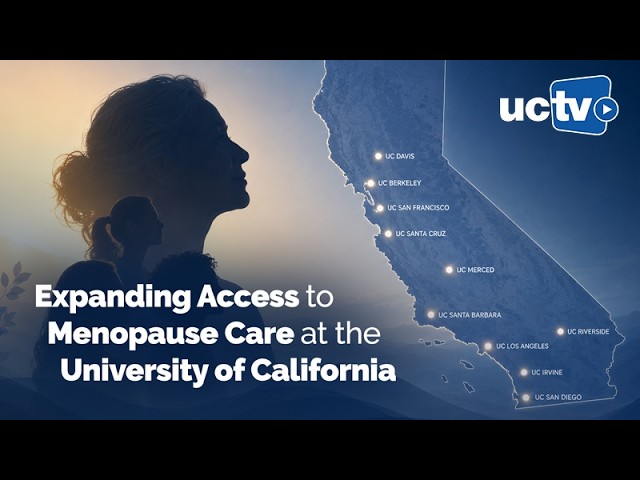
How UC Is Expanding Access to Menopause Care
Keywords
Summary
168 words
Critical Evaluation
Value of the Information & Strength of the Argument
The presentation provides valuable insights into the systemic gaps in menopause care and offers a concrete, multi-pronged solution. The argumentation is well-structured, moving from problem identification (prevalence, undertreatment, historical context) to proposed solutions (training, infrastructure, care models). The speakers support their claims with references to specific studies (Mayo Clinic economic burden, WHI, JAMA 2024) and institutional data (UCLA’s 55% increase in visits). The MAPS system is presented as a practical tool that reduces cognitive load and standardizes care, with evidence of its effectiveness at UCLA. However, some claims rely on unpublished data (Epic research) and the presentation is largely descriptive, lacking rigorous comparative analysis or independent validation.
Scientific Rigor, Source Quality, Title Accuracy
The speakers are credible experts in the field, and they reference several key studies and articles, including the 2023 Mayo Clinic economic analysis, the 2002 WHI trial, and a 2024 JAMA clinical review. They also mention the FDA’s removal of the black box warning in 2025. The description provides links to UCTV’s health and women’s health channels, which serve as general references. The title accurately reflects the content, focusing on the UC Menopause Collaborative’s mission. The presentation is a mix of expert opinion and programmatic description, with some data from internal sources. The sources cited are relevant and generally reliable, though not all are formally published.
228 words
Title / Content Match
The title accurately reflects the content, which focuses on the UC Menopause Collaborative's efforts to expand access to menopause care across University of California health centers.
Quality & Reliability
8/10
The presentation is given by two board-certified OB/GYN specialists who direct menopause programs at UC San Diego and UCLA. They reference specific studies (Mayo Clinic 2023, WHI, JAMA 2024 clinical review) and describe institutional data and a structured clinical tool (MAPS). However, the talk is largely descriptive and programmatic, with limited peer-reviewed citations and some unpublished data (Epic research, internal UCLA metrics).
Chapters
- Why Menopause Care Needs a UC Collaborative
- Why Midlife Symptoms Need Better Care
- How Hot Flashes Affect Health Beyond Discomfort
- Why Hormone Therapy Prescribing Changed
- How Frontline Clinicians Can Close Care Gaps
- How MAPS Supports Menopause Visits
- UCLA Program Growth and UC-Wide Priorities
- Questions on Equity, Research, and Treatment Options
Cited Sources
- UCTV - Health & Medicine — General health and medicine content from UCTV, including this presentation.
- UCTV - UC San Diego Women's Health Symposium — Series page for the symposium where this talk was recorded.
- UCTV - Motherhood Channel — Related content on women's health topics.
- UCTV - Main Channel — General UCTV platform.
Concurring Sources
- Mayo Clinic Proceedings (2023) - Economic burden of menopause — Referenced in the talk for the $26 billion annual economic burden of menopause symptoms.
- JAMA (2024) - Clinical review of WHI — Referenced as a recent review clarifying the WHI findings and supporting hormone therapy for symptomatic younger women.
External References
Contribution & Novelties
The presentation offers a novel perspective on scaling menopause care through a multi-campus collaborative, with a specific focus on integrating clinical tools (MAPS) and standardized workflows. It highlights the importance of training frontline clinicians and using technology to reduce cognitive burden. The talk also emphasizes the need for research infrastructure and policy advocacy.
Pour aller plus loin :
- Menopause - Wikipedia — Overview of menopause, its symptoms, and management.
- Women’s Health Initiative - Wikipedia — Background on the WHI study and its impact on hormone therapy.
- Hormone replacement therapy - Wikipedia — Detailed information on hormone therapy, its history, and current guidelines.
- North American Menopause Society — Professional organization providing evidence-based resources on menopause care.
115 words
Radar Profile
The radar profile shows high scores in information quantity, quality, and reliability, reflecting the expert speakers and structured presentation. The technical level is also high, indicating a detailed discussion of clinical tools and workflows. The overall profile suggests a content that is informative and credible, with a strong emphasis on practical implementation.