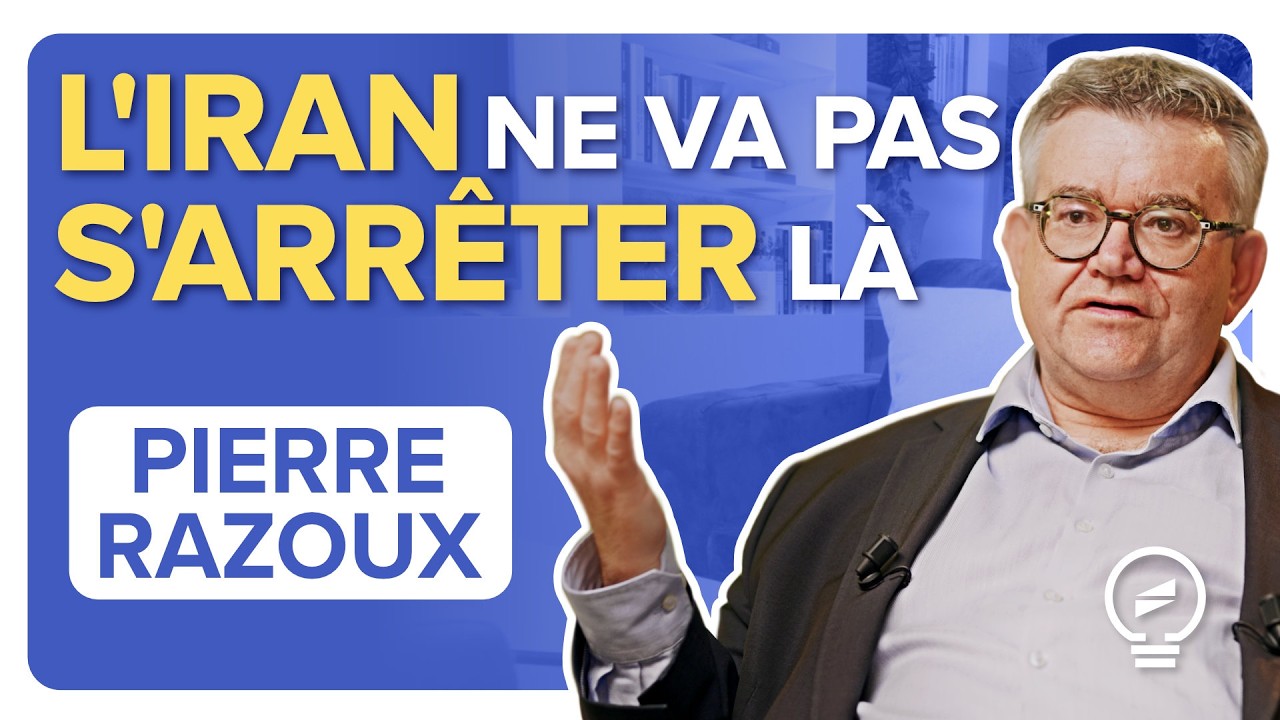
L'IRAN A ÉTÉ CONÇU POUR LA SURVIE : le « coup de poker » désastreux de Trump - Pierre Razoux
Iran was designed for survival: Trump's disastrous gamble - Pierre Razoux
Keywords
Summary
123 words
Critical Evaluation
Value of the Information & Strength of the Argument
The interview provides valuable insights into the strategic thinking of the involved parties, particularly the internal dynamics of the Trump administration and the resilience of the Iranian regime. Razoux’s argumentation is structured, presenting clear scenarios and historical context. However, the analysis is sometimes one-sided, with a tendency to frame Iran’s actions as provocations while downplaying Israeli and US escalatory moves. The expert’s reliance on Western-centric sources and a narrative that aligns with US/Israeli perspectives reduces the overall balance of the argumentation.
Scientific Rigor, Source Quality, Title Accuracy
The interview demonstrates a good level of scientific rigor in its historical and strategic analysis, but it lacks explicit citations of sources. The expert’s credibility is established through his institutional affiliations, but the presentation of certain facts (e.g., the April 2024 attack) is contested by viewers, indicating a potential bias. The title accurately reflects the content, focusing on Iran’s survival design and the US strategic error. The analysis of viewer comments reveals a significant number of criticisms regarding the expert’s perceived bias and use of terminology like ‘regime’, which affects the overall reliability perception.
190 words
Title / Content Match
The title accurately reflects the content, focusing on Iran's resilience and the strategic miscalculation by the US, as discussed throughout the interview.
Quality & Reliability
6/10
The interview provides a structured analysis of the Iran-US-Israel conflict, with clear scenarios and historical context, but is marked by a noticeable pro-Western bias and some factual omissions (e.g., the April 2024 Iranian attack as retaliation for the Israeli strike on its consulate). The expert's credentials are solid, but the presentation of certain events is contested by viewers.
Chapters
- Zapping
- La décision d'entrer en guerre
- Israël et États-Unis, des objectifs de guerre divergents
- 4 scénarios de sortie de la guerre
- L'endurance et les intérêts iraniens
- Les rapports de force de la société iranienne et de son gouvernement
- Le risque d'escalade militaire
- L'état des forces militaires
- La place de la Chine et de la Russie dans la guerre
- La situation des monarchies du Golfe
- Le rôle de la France et de l'Europe
- Un basculement de l'ordre mondial ?
- Question finale
Cited Sources
- ÉLUCID - Offres d'abonnement — Description de la vidéo - pour soutenir la chaîne
- Application mobile ÉLUCID (Apple) — Description de la vidéo - lien vers l'application
- Application mobile ÉLUCID (Android) — Description de la vidéo - lien vers l'application
- Donorbox - ÉLUCID — Description de la vidéo - lien de don
Concurring Sources
- Wikipedia - Iran–Israel proxy conflict — Provides background on the long-standing rivalry, supporting the interview's context.
Dissenting Sources
- Wikipedia - 2024 Iranian strikes in Israel — Viewers pointed out that the interview omitted that the April 2024 Iranian attack was a retaliation for the Israeli strike on the Iranian consulate in Damascus, which contradicts the framing of Iran as the aggressor.
Contribution & Novelties
The interview offers a detailed and structured analysis of the conflict, particularly the strategic calculus of the Iranian regime and the internal divisions within the US administration. It provides a useful framework of four exit scenarios, which helps to understand the possible trajectories of the war. The discussion on the role of China and Russia, and the impact on the global order, adds a broader perspective.
Pour aller plus loin :
- Iran–Israel proxy conflict — Provides background on the long-standing rivalry.
- Strait of Hormuz — Key chokepoint for global oil trade, central to the conflict’s economic impact.
- Joint Comprehensive Plan of Action — The 2015 nuclear deal, relevant to the nuclear dimension of the conflict.
115 words
Radar Profile
The radar profile shows a high quantity of information and a good technical level, but a lower reliability score due to perceived bias and factual omissions. The quality of information is moderate, reflecting the expert's structured but one-sided analysis.
💬 Négatif. Sur les 30 commentaires analysés, une majorité critique le parti pris perçu de l'invité, son usage du terme 'régime' et des omissions factuelles, tout en saluant la qualité générale de la chaîne.