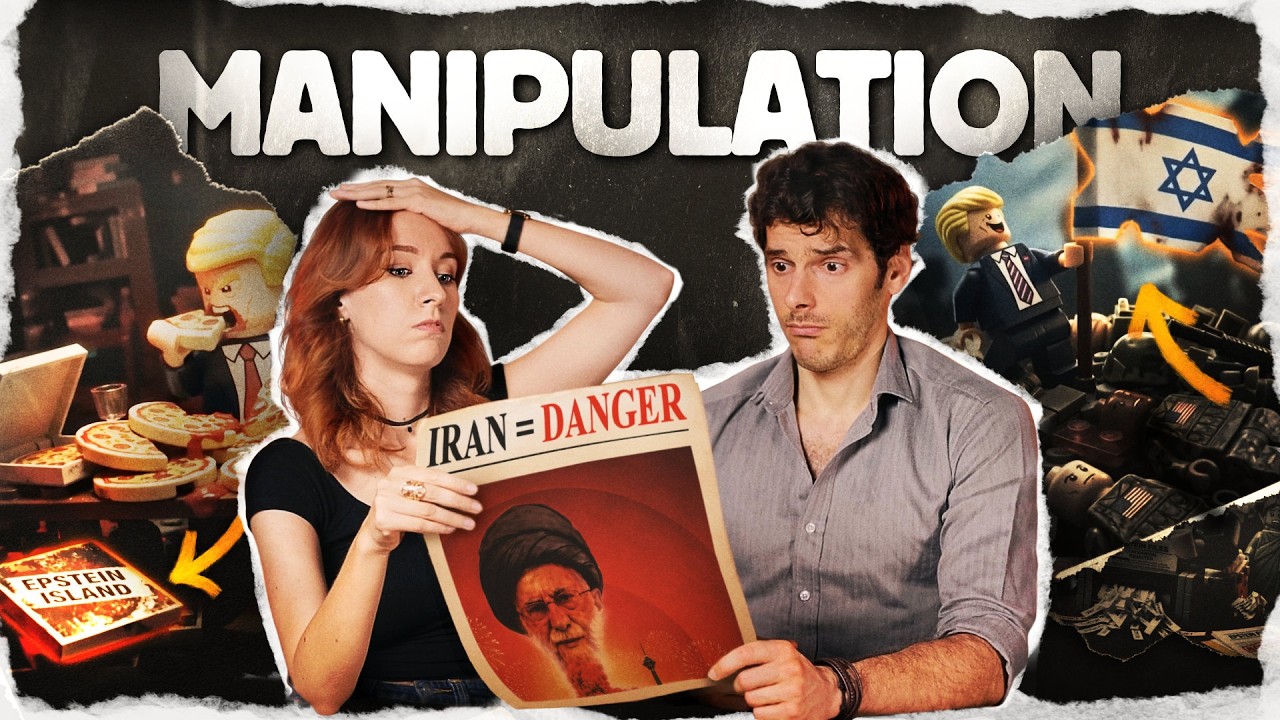
IRAN, ETATS-UNIS : QUI GAGNERA LA GUERRE DES PROPAGANDES ?
IRAN, UNITED STATES: WHO WILL WIN THE PROPAGANDA WAR?
Keywords
Summary
101 words
Critical Evaluation
Value of the Information & Strength of the Argument
The video provides a valuable framework for understanding propaganda by applying theoretical concepts to a current event. The argumentation is structured and coherent, using historical examples and expert references to support claims. However, the analysis is one-sided, focusing primarily on Western propaganda while giving less critical attention to Iranian propaganda, which is acknowledged but not deeply examined. The use of rhetorical questions and dramatic tone may appeal to emotions but also serves to reinforce the narrative.
Scientific Rigor, Source Quality, Title Accuracy
The video references several credible sources and theorists (Edward Said, Jacques Ellul, Samuel Huntington) and mentions specific historical events (Operation Ajax, Iran-Iraq war, JCPOA). However, it does not provide direct citations within the video, and the sources are not always clearly identified. The title accurately reflects the content, though the analysis is more about the mechanisms of propaganda than a definitive answer to who wins. The video’s perspective is clearly critical of Western media and US policy, which may influence the objectivity of the analysis.
176 words
Title / Content Match
The title accurately reflects the content, which analyzes the propaganda war between Iran and the US, though the conclusion is more nuanced than a simple 'who wins'.
Quality & Reliability
7/10
The video offers a structured analysis of propaganda mechanisms applied to the Iran conflict, referencing established theorists (Said, Ellul, Chomsky) and historical facts. However, it lacks direct citations to primary sources within the video, and the analysis is presented from a clear editorial perspective, which may introduce bias.
Chapters
Cited Sources
- Sources de la vidéo (ÉLUCID) — Page de sources mentionnée dans la description pour approfondir les références.
- Chronique précédente — Vidéo précédente de la chaîne sur les principes de propagande.
Concurring Sources
- Edward Said, L'Orientalisme — Ouvrage de référence sur les représentations occidentales de l'Orient.
- Jacques Ellul, Propagandes — Ouvrage de référence sur la propagande.
Dissenting Sources
- Discours de soutien à l'intervention — La vidéo critique les justifications de l'intervention, mais certains médias et experts soutiennent ces justifications, créant une divergence.
External References
Contribution & Novelties
The video offers a contemporary application of established propaganda theories to a specific geopolitical conflict, highlighting the evolution of propaganda techniques in the digital age. It emphasizes the role of ideological conditioning and historical amnesia in shaping public opinion.
Pour aller plus loin :
- Orientalism (Edward Said) — Concept central à l’analyse du bain idéologique.
- Propaganda (Jacques Ellul) — Théorie de la propagande comme phénomène social.
- Clash of Civilizations (Samuel Huntington) — Thèse critiquée dans la vidéo.
- Operation Ajax — Événement historique clé mentionné.
- JCPOA — Accord nucléaire iranien discuté.
90 words
Radar Profile
Le profil radar montre une vidéo avec une quantité d'information élevée et une qualité correcte, mais un niveau technique modéré et une fiabilité globale moyenne, reflétant une analyse experte mais orientée.
💬 Très positif : Sur les 30 commentaires analysés, la grande majorité exprime une forte approbation et un soutien enthousiaste, saluant la qualité de l'analyse et demandant des suites.