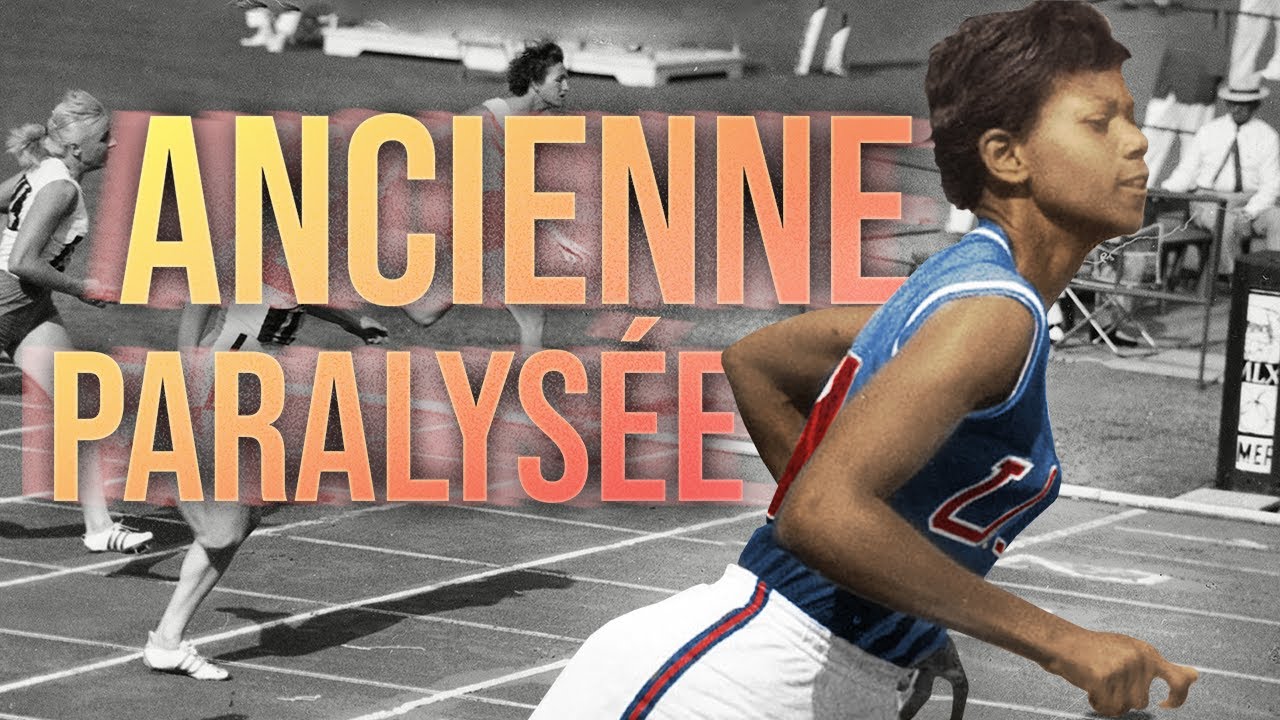
L'ancienne paralysée qui remporte les JO (1960)
The former paralyzed woman who wins the Olympics (1960)
Keywords
Summary
156 words
Critical Evaluation
Value of the Information & Strength of the Argument
The video delivers significant value by bringing to light a historically important but often overlooked figure, and it does so with a compelling narrative. The argumentation is solid: it builds a chronological story grounded in documented events, quotes from Rudolph’s memoirs, and contextual geopolitical and social analysis. It effectively connects her personal struggle with broader themes of discrimination, gender inequality, and the symbolic power of sports. The sponsor segment about adapted training is seamlessly integrated and does not detract from the central narrative, though it is clearly distinct.
Scientific Rigor, Source Quality, Title Accuracy
The video demonstrates good scientific rigor by relying on multiple written sources, including biographies and academic works, as well as official Olympic and Hall of Fame pages. The sources are listed transparently in the description, allowing viewers to verify claims. The presentation does not sensationalize facts but contextualizes them within historical scholarship. The title perfectly matches the content, clearly stating the core story. No significant errors or overstatements were detected. The use of diverse sources strengthens the reliability of the account.
184 words
Title / Content Match
Appropriate; the title accurately captures the key narrative of a formerly paralyzed athlete winning Olympic gold.
Quality & Reliability
8/10
The video presents a well-documented biography of Wilma Rudolph, referencing books and official Olympic sources. The presentation is engaging and the facts are consistent with known history, though presented in a popularized manner.
Key Moments
Markers derived by PSI from the transcript: the creator did not define chapters.
- Introduction of the 1960 Rome Olympics heat and Wilma Rudolph's stunning triple gold medal win.
- Wilma's birth in poverty, being born premature, and contracting scarlet fever and pneumonia at age 4.
- Diagnosis of polio, paralysis of her left leg, and her determination to walk again despite doctors' predictions.
- Recovery through rehabilitation and discovery of athletic talent; she excels in basketball, earning the nickname 'Skipper'.
- First Olympics at Melbourne in 1956, winning bronze in the 4x100m relay at age 16.
- 1960 Olympics: despite a sprained ankle, Wilma wins the 100m in 11.3s, then the 200m and 4x100m to claim three gold medals.
- Impact on media and society: she is called 'the Black Gazelle,' breaks beauty stereotypes, and becomes an icon for racial and gender equality.
- Retirement, university education, and her activism for female athletes and civil rights.
Cited Sources
- Wilma Rudolph, champion athlete (book excerpts) — Provides biographical details of Wilma Rudolph's early life and career.
- (Re)Presenting Wilma Rudolph (book) — Academic analysis of Rudolph's legacy and representation.
- Wilma Rudolph official Olympic page — Official record of her Olympic achievements and archival images.
- National Women's Hall of Fame - Wilma Rudolph — Confirms her induction and summarizes her accomplishments.
- World Athletics Hall of Fame 2014 Inductees — List of inductees including Wilma Rudolph.
- Tokyo 2020 article on Wilma Rudolph — Retrospective about her three gold medals and their significance.
- Eurosport article on Wilma Rudolph — Popular account of her overcoming paralysis to become the fastest woman.
- Universalis - First Olympic television broadcast — Context of the 1960 Games being the first televised live, which amplified her impact.
Concurring Sources
- Official Olympic page for Wilma Rudolph — Confirms her triple gold medal and records.
- National Women's Hall of Fame entry — Recognizes her achievements and legacy.
- Eurosport article — Corroborates the narrative of overcoming paralysis and becoming a world-record holder.
External References
Contribution & Novelties
The video contributes by popularizing the story of Wilma Rudolph in the French-speaking world, combining biographical narrative with historical and sociological context. It emphasizes the intersection of disability, race, and gender in sports, a perspective not always highlighted. New light is shed on how her victories influenced media representations and the civil rights movement.
Pour aller plus loin :
- Wilma Rudolph - Wikipedia — Overview of her life and career, with cited sources.
- Polio - Wikipedia — Understanding the disease that caused her paralysis and the impact of rehabilitation.
- 1960 Summer Olympics - Wikipedia — Context of the Games, including the first live broadcasts.
- Civil Rights Movement and Sports - Wikipedia — Broader link between athletics and racial equality.
- Gender and Sports - Wikipedia — Discussion on historical barriers for women in athletics.
133 words
Radar Profile
The radar shows high scores in information quantity and quality, with a moderate technical level. The video balances factual depth with accessible storytelling, making it valuable for general audiences while maintaining scholarly integrity in its sourcing.
💬 Ferveur: On the 30 comments analyzed, the climate is overwhelmingly positive, with viewers expressing admiration for Wilma Rudolph's story and gratitude for the educational content.