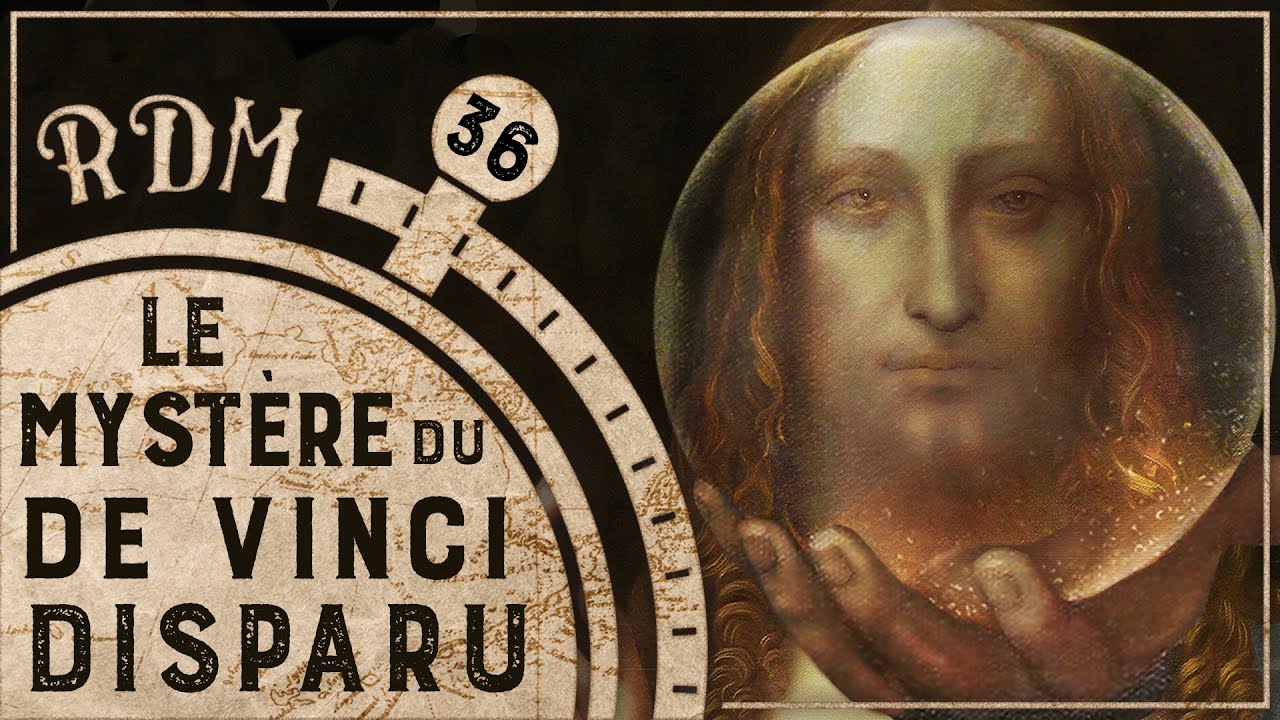
Le tableau le plus cher de l'Histoire est-il un faux ? - RDM #36
Is the most expensive painting in History a fake? - RDM #36
Keywords
Summary
183 words
Critical Evaluation
Value of the Information & Strength of the Argument
The video provides rich contextual information about the art market, the atelier system, and the challenges of attribution. It effectively presents multiple viewpoints—experts who authenticate the painting, skeptics pointing out technical flaws, and researchers using computational methods. The argumentation is balanced, acknowledging uncertainties and presenting hypotheses without settling definitively. The use of a 3D simulation study adds scientific credibility, and the narrative maintains a clear logical flow from the painting’s rediscovery to its controversial sale and disappearance.
Scientific Rigor, Source Quality, Title Accuracy
The video cites several reputable sources: academic articles from arXiv and semanticscholar, press articles from Connaissance des Arts, RTS, Frieze, and Le Figaro. These sources are directly relevant to the topic and appear reliable. The title accurately reflects the content, and the video stays on-topic throughout. The presence of a short intro/outro with personal comments does not distract. The creator also provides transparency about supporting links and credits. The rigorousness is good, though the presenter occasionally mixes entertainment with factual reporting, which slightly reduces the perceived seriousness for a strictly academic audience.
184 words
Title / Content Match
The title exactly matches the content: it asks whether the most expensive painting in history is a fake, and the video thoroughly explores the Salvator Mundi's provenance, authentication debates, and mysterious disappearance.
Quality & Reliability
7/10
The video presents a well-documented case with references to academic and press sources, but the narrative is partly speculative and includes humorous digressions. The science behind the light analysis is mentioned but not deeply explained, and the authentication controversies are summarized rather than critically examined.
Key Moments
Markers derived by PSI from the transcript: the creator did not define chapters.
- Introduction: the most expensive painting is not the Mona Lisa but the Salvator Mundi, sold for $450 million.
- Background: the painting was painted around 1500, represents Jesus holding a crystal orb, and about twenty other versions exist.
- Attribution challenges: Leonardo's atelier practices and his influence on other artists make authentication difficult.
- The painting's history: owned by the Cook family, sold for £45 in 1958, rediscovered in 2005, and restored.
- Authentication process: experts debate, Martin Kemp supports it, others like Jacques Franck doubt due to the finger and missing light reflections.
- Sale at Christies in 2017 for $450 million to a Saudi buyer, later revealed to be Crown Prince Mohammed bin Salman.
- Disappearance mystery: painting not exhibited as promised, theories include hiding due to Islamic iconography or being kept on the prince's yacht.
- 2019 study by University of California researchers using 3D modeling to show the orb's light refraction is physically accurate, suggesting Da Vinci's scientific expertise.
- April 2019: Abu Dhabi confirms possession, but location still secret; specialists remain divided on authenticity.
Cited Sources
- arXiv: Computer graphics analysis of the Salvator Mundi — Academic study cited for the light refraction analysis in the painting.
- Semanticscholar: PDF of the study — Full paper of the light analysis study.
- Connaissance des Arts: mystery of Salvator Mundi resolved with new technologies — Press article discussing the computer graphics study.
- RTS: the most expensive painting disappeared — News report on the painting's disappearance.
- Frieze: Christies rejects Oxford scholars' claim that Salvator Mundi was painted by Leonardo's assistant — Article about counterclaims to authenticity.
- Le Figaro: Leonardo expert denies attributing Salvator Mundi to the master — Expert opinion refuting Leonardo's authorship.
Concurring Sources
- Christie's official sale page — Official record of the sale, corroborating the price and buyer.
Dissenting Sources
- Oxford scholars' claim — Scholars argued the painting was made by Leonardo's assistant, contradicting the attribution to Leonardo.
External References
Contribution & Novelties
The video provides a comprehensive and engaging summary of the Salvator Mundi controversy, synthesizing historical context, authentication debates, and recent scientific research. Its originality lies in presenting the computational study by the University of California as a new piece of evidence while also highlighting the religious and political angles of the painting’s disappearance. The creator adds a personal touch without losing factual accuracy.
Pour aller plus loin :
- Computer graphics analysis of the Salvator Mundi — Direct source of the 3D modeling study.
- Salvator Mundi on Wikipedia — General overview of the painting’s history and controversies (no URL guaranteed? Wikipedia link is safe).
- Leonardo da Vinci’s painting techniques — Relevant to understanding the artist’s mastery of light and optics.
119 words
Radar Profile
The radar profile shows high scores in information quantity and reliability, with a moderate technical level and slightly lower quality due to the presenter's humorous tone. This suggests a well-researched documentary that balances entertainment with educational content, making it accessible while maintaining scientific credibility.
💬 très positif. Sur les 30 commentaires analysés, la grande majorité exprime un fort enthousiasme pour la vidéo, louant le contenu intéressant, l'humour du présentateur et la qualité des recherches, avec quelques remarques pertinentes sur des détails techniques.