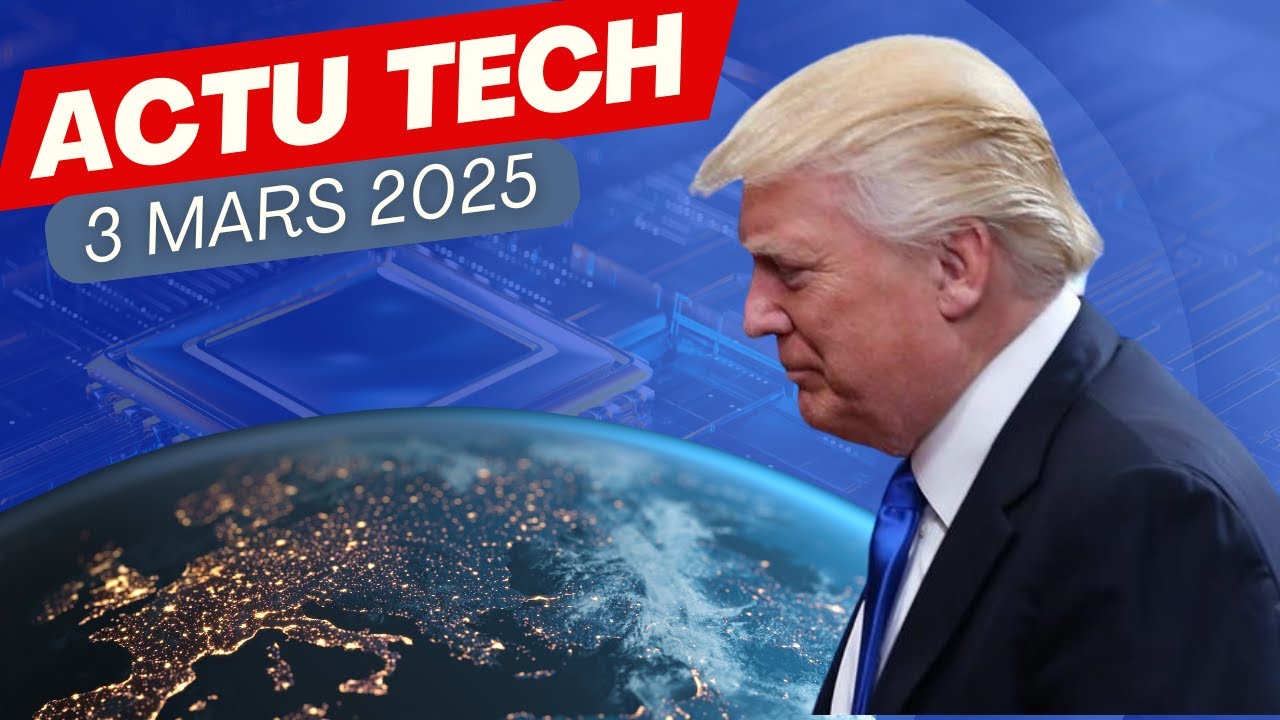
Pourquoi la bataille entre Europe et États-Unis change le web ?!
Why is the battle between Europe and the United States changing the web?!
Keywords
Summary
142 words
Critical Evaluation
Value of the Information & Strength of the Argument
The video provides a valuable overview of current events in the tech and digital sectors, particularly the trade war between the US and EU and its potential consequences for European consumers and businesses. The creator offers a balanced perspective, acknowledging both potential benefits and drawbacks of the tariffs. However, the argumentation is largely speculative and lacks concrete data or expert opinions to support the claims. The discussion of Meta’s strategies and Alibaba’s open-source model is informative but remains at a surface level, without deep analysis of the technical or economic implications.
Scientific Rigor, Source Quality, Title Accuracy
The video does not cite specific sources for the news items, relying on general knowledge and the creator’s interpretation. The description provides a link to the creator’s website, but no direct references to articles or studies are given. The title accurately reflects the main topic, but the content also covers several other tech news items, which is typical for a news review format. The lack of verifiable sources and the informal tone reduce the scientific rigor of the content.
185 words
Title / Content Match
The title accurately reflects the main topic of the video, which focuses on the trade tensions between Europe and the US and their potential impact on the digital landscape.
Quality & Reliability
6/10
The video is a news review of tech and digital topics, mixing factual announcements with personal analysis and speculation. The creator provides context and some critical perspective, but lacks detailed sourcing and verification of claims. The tone is informal and opinionated, which reduces the overall reliability.
Chapters
Cited Sources
- Renaud Dékode website — The creator's website, mentioned in the description, where discussions and additional content are available.
Concurring Sources
- European Commission press release on trade — Official EU response to US tariffs, supporting the video's claim of potential countermeasures.
Dissenting Sources
- Meta's official statements — Meta has not publicly confirmed the standalone Reels app or the Meta AI app launch details, which the video presents as certain.
Contribution & Novelties
The video offers a synthesis of recent tech news with a focus on the geopolitical implications of trade policies on the digital economy. It highlights the potential for Europe to develop its own digital infrastructure as a result of US tariffs, and discusses the ethical challenges posed by open-source AI video generation. The coverage of Unitree’s robot and The Boring Company’s Dubai project adds a forward-looking perspective on robotics and urban mobility.
Pour aller plus loin :
- EU-US trade relations — Background on the trade relationship between the EU and the US.
- General Data Protection Regulation (GDPR) — EU regulation on data protection, relevant to the discussion on data flows.
- Open-source AI — Overview of open-source AI models and their implications.
121 words
Radar Profile
The radar profile shows moderate scores across all dimensions, with a slightly higher quantity of information but lower technical depth and reliability. This suggests a content that is informative but not deeply analytical or rigorously sourced.