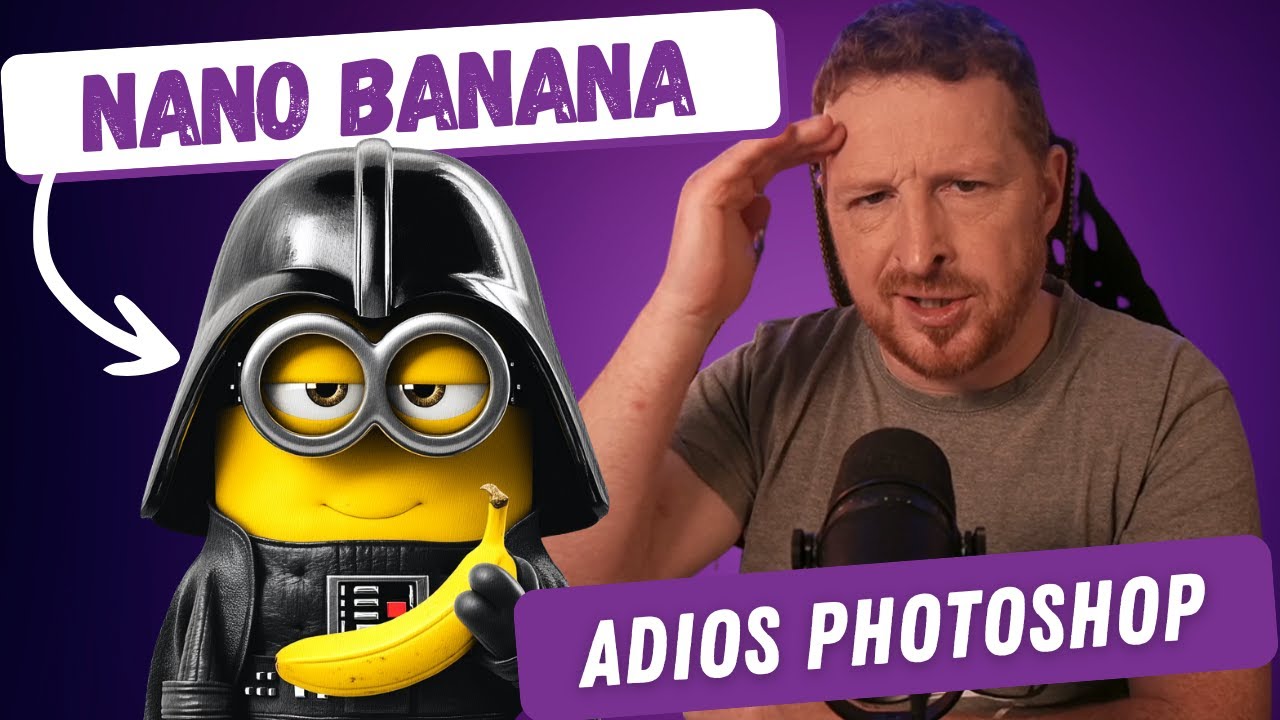
Nano Banana : L'IA Qui Va Révolutionner la Retouche Photo et Tuer Photoshop !
Nano Banana: The AI That Will Revolutionize Photo Editing and Kill Photoshop!
Keywords
Summary
195 words
Critical Evaluation
Value of the Information & Strength of the Argument
The video provides a practical, hands-on evaluation of Nano Banana, demonstrating its capabilities through live tests. The creator’s argumentation is based on direct observation and comparison with other models, which adds credibility. However, the lack of official information and the reliance on speculation about the model’s origin weakens the overall argument. The value lies in the early access demonstration and the practical tips for testing the model on LMArena.
Scientific Rigor, Source Quality, Title Accuracy
The scientific rigor is moderate: the creator clearly labels what is known versus speculated, but no official sources are cited. The title is somewhat sensationalist, but the content does focus on the potential impact of Nano Banana on photo editing. The description provides a link to the creator’s website, but no direct references to the model’s technical details or official announcements.
145 words
Title / Content Match
The title accurately reflects the content, focusing on the potential of Nano Banana to disrupt traditional photo editing, though the claim about 'killing Photoshop' is hyperbolic.
Quality & Reliability
6/10
The video is a hands-on demonstration of an unreleased AI model accessed via LMArena, with speculative attribution to Google. The creator clearly distinguishes verified observations from assumptions, but lacks official sources and in-depth technical analysis.
Key Moments
Markers derived by PSI from the transcript: the creator did not define chapters.
- Introduction to Nano Banana, an AI image generation model, and speculation about its origin (likely Google).
- Explanation of how to access Nano Banana via LMArena, a platform for comparing AI models.
- First live test: uploading an image and requesting an edit, comparing two AI models.
- Result of first test: Nano Banana (right) and Flux Kontext Pro (left) both produce coherent edits, but Nano Banana preserves the original robot's identity.
- Second test: editing a photo to change the scene, showing Nano Banana's ability to maintain character consistency.
- Third test: attempting to edit a photo of a person, with mixed results; GPT Image 1 outperforms in this case.
- Discussion on the potential impact of Nano Banana on the profession of graphic designers, suggesting it could replace low-value retouching jobs.
- Encouragement for viewers to test Nano Banana themselves and share their results on the creator's website.
- Conclusion: Nano Banana is a promising tool, but not yet officially available; viewers should build their own portfolio of AI tools.
Cited Sources
- Renaud Dékode's website — Mentioned as a place to share ideas and stay updated on Nano Banana's availability.
Concurring Sources
- LMArena — The platform where Nano Banana is being tested, as demonstrated in the video.
Contribution & Novelties
The video provides an early, hands-on look at Nano Banana, an unreleased AI image editing model, and demonstrates its capabilities through live tests on LMArena. It highlights the model’s strength in maintaining character identity and scene coherence, which is a key differentiator from other models. The practical guide on how to access the model via LMArena is a novel contribution for early adopters.
Pour aller plus loin :
- LMArena — Platform where Nano Banana is being tested; users can try it by uploading images and requesting edits.
- Google AI — Official Google AI page, where announcements about new models like Nano Banana might appear.
- Flux Kontext — Another AI image generation model mentioned in the video, known for its coherence and editing capabilities.
123 words
Radar Profile
The radar profile shows a balanced performance across all dimensions, with slightly higher scores in information quantity and quality, reflecting the video's practical demonstrations and clear explanations. The technical level is moderate, suitable for a general audience interested in AI applications.