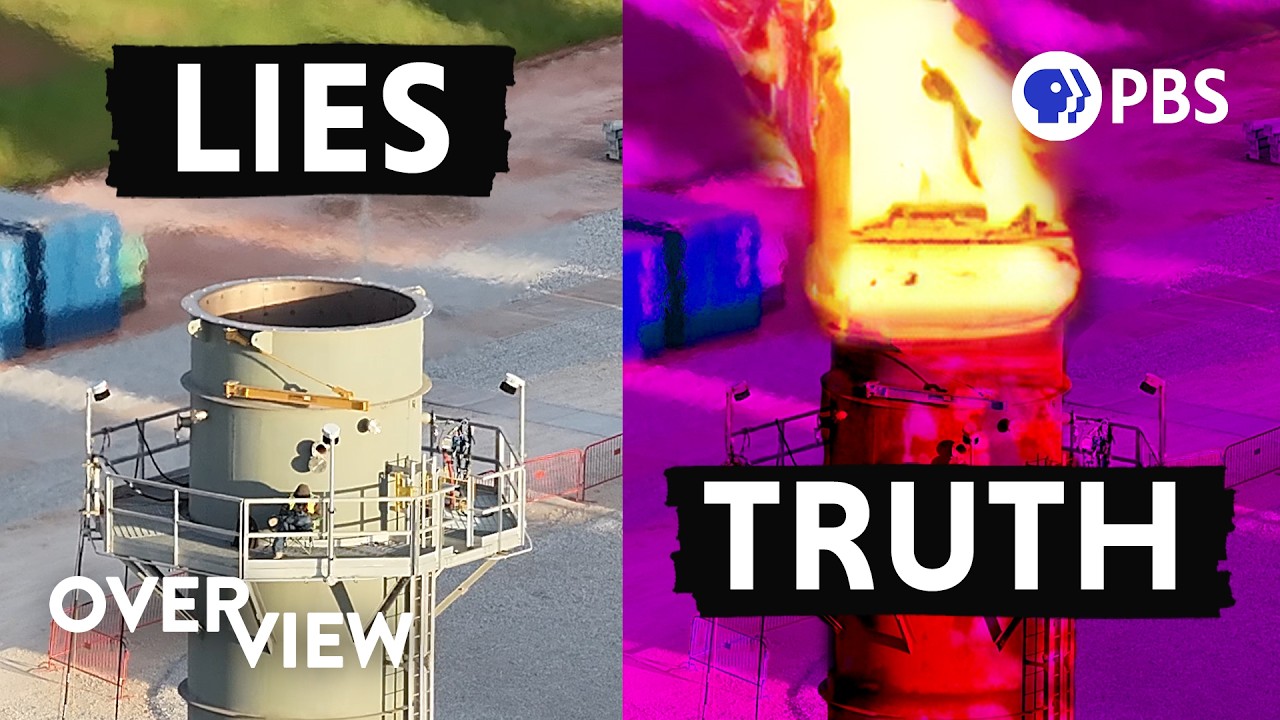
We Saw What AI Data Centers Don't Want You to See
Keywords
Summary
145 words
Critical Evaluation
Value of the Information & Strength of the Argument
The video delivers high-value original footage, including thermal imagery that visualizes invisible pollution, offering a fresh perspective on a fast-growing industry. The argumentation is solid, built on expert interviews (e.g., from Public Citizen) and investigative findings from Floodlight News. Claims about pollution and regulatory gaps are backed by concrete examples and publicly available data, though some specific statistics (like healthcare cost estimates) are cited without explicit sources. The narrative effectively contrasts corporate promises with on-the-ground realities, making a compelling case for greater transparency and regulation.
Scientific Rigor, Source Quality, Title Accuracy
The scientific rigor benefits from collaboration with Floodlight News, a credible investigative outlet, and input from former Texas environmental regulators. However, it relies more on journalistic methods than peer-reviewed data, with some numbers presented without full provenance. The title is well-matched: it accurately describes the uncovering of hidden aspects of AI data centers, and the content delivers on this premise. The use of thermal drones adds a tangible, visual evidence layer that strengthens the investigative credibility.
176 words
Title / Content Match
Title accurately reflects the investigative nature and hidden pollution revealed, staying true to the content.
Quality & Reliability
8/10
The video combines investigative journalism with expert interviews, public records requests, and thermal drone imaging. Sources include Floodlight News, a reputable nonprofit newsroom. Claims are contextualized with data and expert commentary. However, some specifics lack direct citations beyond general references.
Key Moments
Markers derived by PSI from the transcript: the creator did not define chapters.
- Introduction to Stargate data center scale and size comparison to Central Park.
- Discussion of NDAs signed by public officials and secrecy surrounding data centers.
- Thermal drone footage reveals heat signatures and pollution at the facility.
- Investigation of xAI's Colossus in Mississippi and unpermitted turbines.
- Explanation of the Jevons Paradox and its implication for AI energy demand.
- Concerns about water usage and heat island effects from data centers.
- Expert interview with Kathryn Guerra on regulatory capacity and permit by rule.
- Conclusion highlighting the gap between AI promises and current environmental costs.
Cited Sources
- Floodlight News — Investigative partner providing details on data center and energy issues.
External References
Contribution & Novelties
This video provides novel investigative evidence by using thermal drone technology to make visible the otherwise invisible pollution from AI data centers. It exposes regulatory loopholes like permit-by-rule and NDAs that shield companies from public scrutiny, and it brings to light the lived experiences of affected residents. The piece contributes to the growing discourse on AI’s environmental footprint with concrete, visual proof.
Pour aller plus loin :
- Jevons Paradox — Explains the efficiency-demand rebound effect highlighted in the video.
- Environmental impact of artificial intelligence — Provides broader context on AI-related energy and carbon footprints.
- Data center environmental impact — Covers water usage, heat, and pollution from data centers.
- Permit by rule (Texas) — Background on state permitting processes.
118 words
Radar Profile
The radar profile shows high scores across Information Quantity and Quality, indicating a dense, well-supported investigation. Technical Level is moderate, reflecting accessible explanations of complex topics. Reliability is strong, driven by the use of established newsroom practices and expert voices, though not peer-reviewed research.
💬 Sur les 30 commentaires analysés, le climat est un tollé général contre le manque de transparence et la complicité perçue des responsables publics, avec des appels répétés à des sanctions pénales et à la responsabilisation des entreprises.