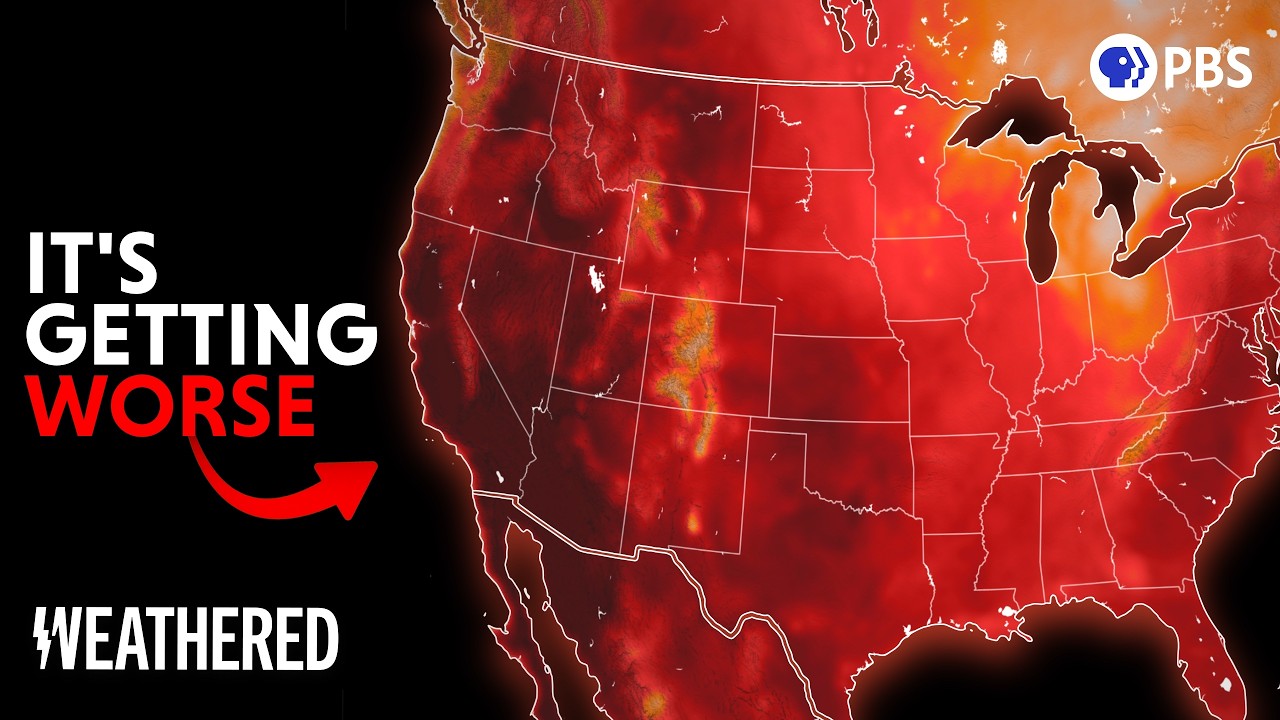
EXTREME HEAT Is Getting Worse, and It Will Reshape Earth FOREVER
Keywords
Summary
175 words
Critical Evaluation
Value of the Information & Strength of the Argument
The video provides substantial value by synthesizing complex climate science into accessible segments, using concrete examples and expert interviews to illustrate key points. The argumentation is generally solid, presenting scientific consensus on climate change and its impacts. However, the compilation format leads to some repetition and a lack of deep dives into specific topics. The video effectively argues that extreme heat is a growing crisis requiring urgent action, but it could benefit from more explicit discussion of counterarguments or uncertainties.
Scientific Rigor, Source Quality, Title Accuracy
The scientific rigor is high, with reliance on established climate science and data from reputable sources like NOAA. The video features interviews with researchers and experts, lending credibility to the information presented. The title accurately reflects the content’s focus on the increasing severity of extreme heat. The compilation nature of the video means that some information may be dated, but it remains relevant. The description provides links to PBS Terra’s channels but no direct citations to specific studies, which is a minor weakness.
178 words
Title / Content Match
The title accurately reflects the content, which focuses on the increasing severity of extreme heat and its global impacts.
Quality & Reliability
8/10
The video compiles several episodes from PBS Terra, a reputable science communication channel. It features interviews with scientists and experts, uses data from NOAA and other sources, and presents information in a balanced manner. However, it is a compilation of previously published content, and some claims lack direct citations within the video.
Chapters
- Intro
- How America’s Hottest City is Innovating to Survive (originally published June 7, 2021)
- Cities are getting too hot to handle. TREES help us survive. (originally published August 16, 2022)
- Why Is The U.S. Warming Faster Than Average? (originally published April 19, 2023)
- Too HOT and HUMID to Live: Extreme Wet Bulb Events Are on the Rise (originally published May 9, 2023)
- These Diseases LOVE a Warmer World But Which Should We Worry About? (originally published September 5, 2023)
- What Will Our World Look Like at 4 Degrees? (originally published October 10, 2024)
- When Will Extreme Heat Become Unlivable? (originally published June 18, 2025)
Cited Sources
- PBS Terra Donation Page — Mentioned in the video description as a way to support the channel.
Concurring Sources
- NOAA Climate.gov — The video references NOAA data on global and US temperature trends, and this site is a primary source for such information.
Contribution & Novelties
The video’s main contribution is its comprehensive, multi-faceted overview of the extreme heat crisis, effectively connecting local urban issues (like Phoenix’s heat island) to global climate trends and the concept of wet-bulb temperature. It provides a compelling narrative that underscores the urgency of adaptation.
Pour aller plus loin :
- Wet-bulb temperature — Explains the physical concept central to the video’s discussion of habitability limits.
- Urban heat island — Details the phenomenon of cities being warmer than surrounding areas, a key topic in the video.
- Redlining — Provides historical context for the neighborhood-level temperature disparities highlighted in the video.
98 words
Radar Profile
The radar profile shows a well-rounded video, with high scores in information quantity, quality, and reliability, and a slightly lower but still solid score in technical depth. This indicates a scientifically credible and informative piece suitable for a general audience.
💬 Sur les 30 commentaires analysés, le ton est majoritairement négatif et alarmiste, reflétant une inquiétude face à l'aggravation des vagues de chaleur et un sentiment d'impuissance. De nombreux commentaires partagent des expériences personnelles de chaleur extrême et critiquent l'inaction politique.