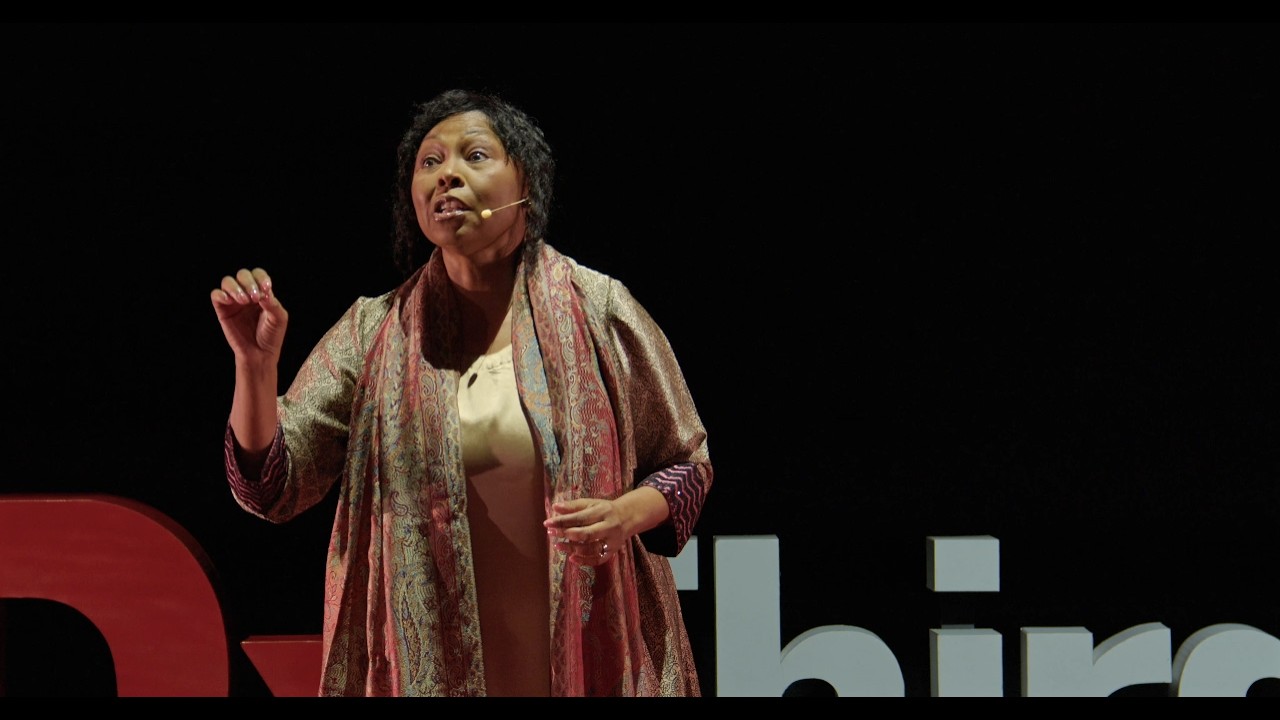
Coffee with Wilma Flintstone | Gail Awan PhD | TEDxThird Ward Salon
Keywords
Summary
173 words
Critical Evaluation
Value of the Information & Strength of the Argument
The talk provides a personal and accessible perspective on DNA and identity, but its value is limited by a lack of scientific rigor. The argumentation is largely anecdotal, relying on personal stories and metaphors rather than empirical evidence. The J.O.G.I.™ framework is presented as a novel approach, but its components are not deeply elaborated or supported by research. The speaker’s charisma and storytelling ability make the content engaging, but the scientific claims are vague and sometimes overgeneralized, such as the assertion that DNA influences tendencies from waking up to emotional responses.
Scientific Rigor, Source Quality, Title Accuracy
The talk lacks rigorous scientific sourcing; no specific studies or academic references are cited. The only external link provided is to TEDx generally, which does not substantiate the claims. The title’s reference to Wilma Flintstone is a creative hook but not central to the content. The talk is more of an inspirational narrative than a scientific exposition. The audience response, as indicated by the low view and like counts, suggests limited engagement, but no comments were provided to analyze.
185 words
Title / Content Match
The title is catchy and metaphorical, referencing a pop-culture figure to illustrate ancestral connections, but the actual content focuses more on DNA and identity than on Wilma Flintstone specifically.
Quality & Reliability
5/10
The talk offers a personal and anecdotal perspective on identity and DNA, with limited scientific depth and no citations of specific studies. The framework J.O.G.I.™ is presented as an original concept but lacks empirical validation.
Key Moments
Markers derived by PSI from the transcript: the creator did not define chapters.
- Introduction: What makes us who we are?
- Childhood story: visit to a psychologist at Emory University.
- Discussion of DNA as a personal relationship.
- Introduction of J.O.G.I.™ framework.
- Reference to prehistoric handprints and Wilma Flintstone.
- Personal DNA results and ancestral noise.
- Connection between nomadic patterns and DNA.
- Conclusion: choosing what kind of ancestors we become.
Cited Sources
- TEDx — General TEDx information, not specific to the talk.
Concurring Sources
- Genetic genealogy — Supports the idea that DNA testing can reveal ancestral origins.
Dissenting Sources
- Scientific consensus on DNA and identity — The talk's claim that DNA influences tendencies like restlessness or need for control is not supported by scientific evidence; such traits are complex and influenced by many factors.
Contribution & Novelties
The talk offers a personal and metaphorical approach to understanding DNA and identity, introducing the J.O.G.I.™ framework as a tool for self-reflection. Its novelty lies in framing DNA as a relationship rather than a purely scientific concept, making it accessible to a general audience. However, the scientific contribution is minimal, and the framework lacks empirical backing.
Pour aller plus loin :
- Genetic genealogy — Provides background on DNA testing for ancestry.
- Ancestral noise — Discusses the concept of small DNA percentages from various regions.
- Epigenetics — Explores how environment and experience influence gene expression, relevant to the talk’s theme of DNA as a dynamic relationship.
105 words
Radar Profile
The radar profile shows low scores across all dimensions, indicating a talk that is engaging but lacks depth and scientific rigor. The highest score is in information quantity, but it is still low, reflecting the anecdotal nature of the content.