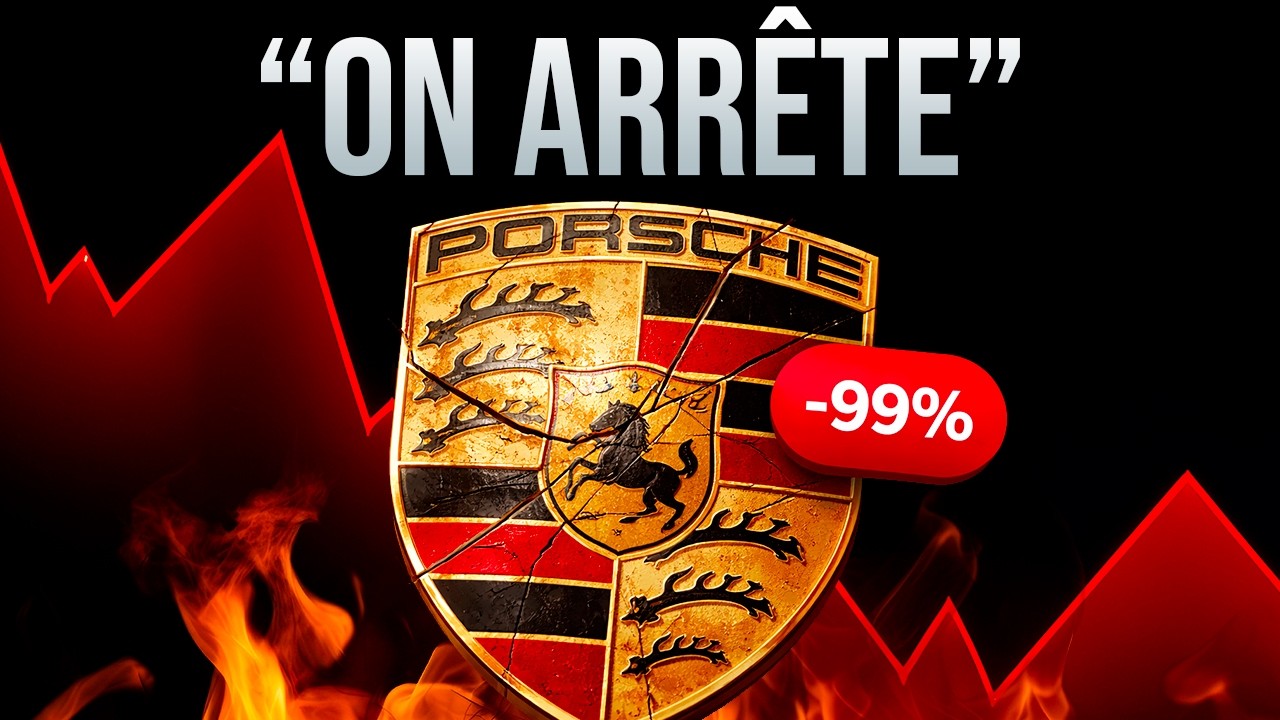
Pourquoi Porsche va très mal
Why Porsche is in such bad shape
Keywords
Summary
158 words
Critical Evaluation
Value of the Information & Strength of the Argument
The video provides valuable insights into the challenges faced by traditional automakers in the electric transition, using Porsche as a case study. It presents a coherent narrative supported by specific financial data (e.g., 99% profit drop, sales figures) and concrete examples (battery issues, recalls, tariffs). The argumentation is persuasive, linking strategic decisions to market outcomes. However, the analysis is somewhat one-sided, focusing on negative aspects without a balanced discussion of potential counterarguments or mitigating factors. The creator’s expertise in finance is evident, but the video lacks depth in technical automotive details.
Scientific Rigor, Source Quality, Title Accuracy
The video cites a single source (CFO.com) for its financial data, which is a reputable business publication, but the analysis would benefit from corroborating evidence from other sources. The title accurately reflects the content, and the video is well-structured with clear chapters. The presence of a sponsorship segment is clearly disclosed, and the creator’s promotional content is separated from the main analysis. Overall, the scientific rigor is moderate, with a need for more diverse sourcing to strengthen credibility.
184 words
Title / Content Match
The title accurately reflects the content, which focuses on the reasons behind Porsche's recent struggles.
Quality & Reliability
6/10
The video is a well-structured analysis of Porsche's current difficulties, citing specific financial figures and events. However, it relies heavily on a single source (CFO.com) and the creator's own interpretation, without cross-referencing multiple independent sources. The presence of a sponsorship segment and promotional content slightly detracts from objectivity.
Chapters
Cited Sources
- Porsche's Profit Plunges 99% as CFO Jochen Breckner Manages EV Reset Trial Balance — Source cited for the financial figures and the CEO's internal message.
- Freedom24 — Sponsor link, offering commission-free trading.
- Invvest.co — Creator's free investment tracking tool.
Concurring Sources
- Porsche's Profit Plunges 99% as CFO Jochen Breckner Manages EV Reset Trial Balance — The main source cited, providing financial data and strategic context.
Contribution & Novelties
The video offers a clear and accessible synthesis of Porsche’s current crisis, linking strategic missteps in electrification, technical failures, and geopolitical factors. It highlights the ‘scissor effect’ of investing in EVs while facing declining demand and tariffs. The analysis of the Chinese market’s impact on Porsche’s sales is particularly insightful.
Pour aller plus loin :
- Porsche’s electrification strategy — Overview of the Taycan model and its market reception.
- Dieselgate scandal — Context for Volkswagen’s push towards electric vehicles.
- US tariffs on European cars — Background on the trade tensions affecting Porsche’s US sales.
93 words
Radar Profile
The radar profile shows a balanced performance across all dimensions, with slightly higher scores in information quantity and quality, reflecting the video's informative nature. The technical level is moderate, suitable for a general audience, while reliability is adequate but could be improved with more diverse sourcing.
💬 The comments are predominantly negative, with viewers expressing disappointment in Porsche's strategic direction and quality issues. Many highlight the brand's loss of connection with its customers and the impact of high costs and tariffs. Some comments also point out factual errors or offer alternative perspectives, but the overall sentiment is critical.