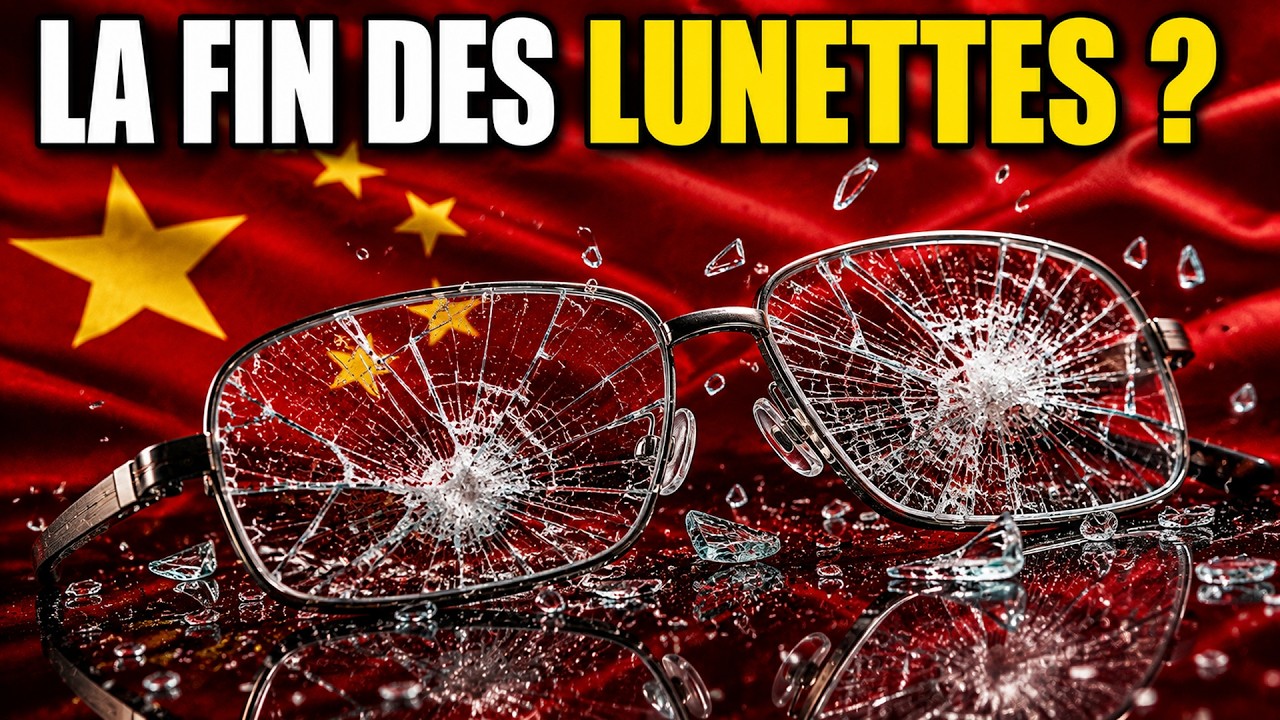
Vos Lunettes Coûtent 3 € À Fabriquer. Voici Pourquoi Vous Les Payez 400.
Your Glasses Cost 3 € to Make. Here's Why You Pay 400 for Them.
Keywords
Summary
165 words
Critical Evaluation
Value of the Information & Strength of the Argument
The video provides valuable insights into the economics of the eyewear industry, highlighting the significant markup on glasses and the role of vertical integration. The argumentation is coherent and well-structured, moving from the description of the monopoly to the disruptive force of Danyang’s manufacturing ecosystem. The creator supports claims with specific examples, such as the cost of frames and the legal actions against EssilorLuxottica. However, the analysis is largely based on the creator’s perspective and lacks direct citations to primary sources, which somewhat weakens the overall argumentation.
Scientific Rigor, Source Quality, Title Accuracy
The video demonstrates a good understanding of the industry, referencing specific companies, legal cases, and production figures. However, it does not provide direct links to sources, making it difficult to verify the claims. The title accurately reflects the content, focusing on the cost disparity and the reasons behind it. The video appears to be well-researched, but the lack of explicit citations reduces its scientific rigor.
167 words
Title / Content Match
The title accurately reflects the core content: the cost disparity and the reasons behind high retail prices.
Quality & Reliability
7/10
The video provides a well-structured analysis of the eyewear industry, citing specific figures and legal cases. However, it relies heavily on the creator's interpretation and lacks direct citations to primary sources, reducing its verifiability.
Chapters
Cited Sources
- Los Angeles Times article (March 2019) — Quoted by the creator regarding the cost of frames.
- Class action lawsuit (2023) — Mentioned as filed against EssilorLuxottica and others for price fixing.
- Settlement of $39 million (September 2024) — Related to false advertising about measurement accuracy.
Concurring Sources
- EssilorLuxottica official website — Provides corporate information and confirms the company's scale and brand portfolio.
Dissenting Sources
- Industry reports on eyewear pricing — Some reports may argue that the high cost of glasses is justified by R&D and precision manufacturing, contrary to the video's emphasis on markup.
Contribution & Novelties
The video offers a fresh perspective by highlighting the role of Danyang, China, in the global eyewear industry and how its manufacturing ecosystem is challenging the traditional monopoly. It also discusses the strategic shift of EssilorLuxottica towards smart glasses, which adds a forward-looking dimension.
Pour aller plus loin :
- Vertical integration — Key concept explaining EssilorLuxottica’s strategy.
- Monopoly — Relevant to the discussion of market dominance.
- E-commerce — Central to the disruption of traditional retail.
75 words
Radar Profile
The radar profile shows high scores in information quantity and quality, indicating a content-rich video. The technical level is moderate, making it accessible to a general audience. The overall reliability is moderate, reflecting the lack of direct citations.