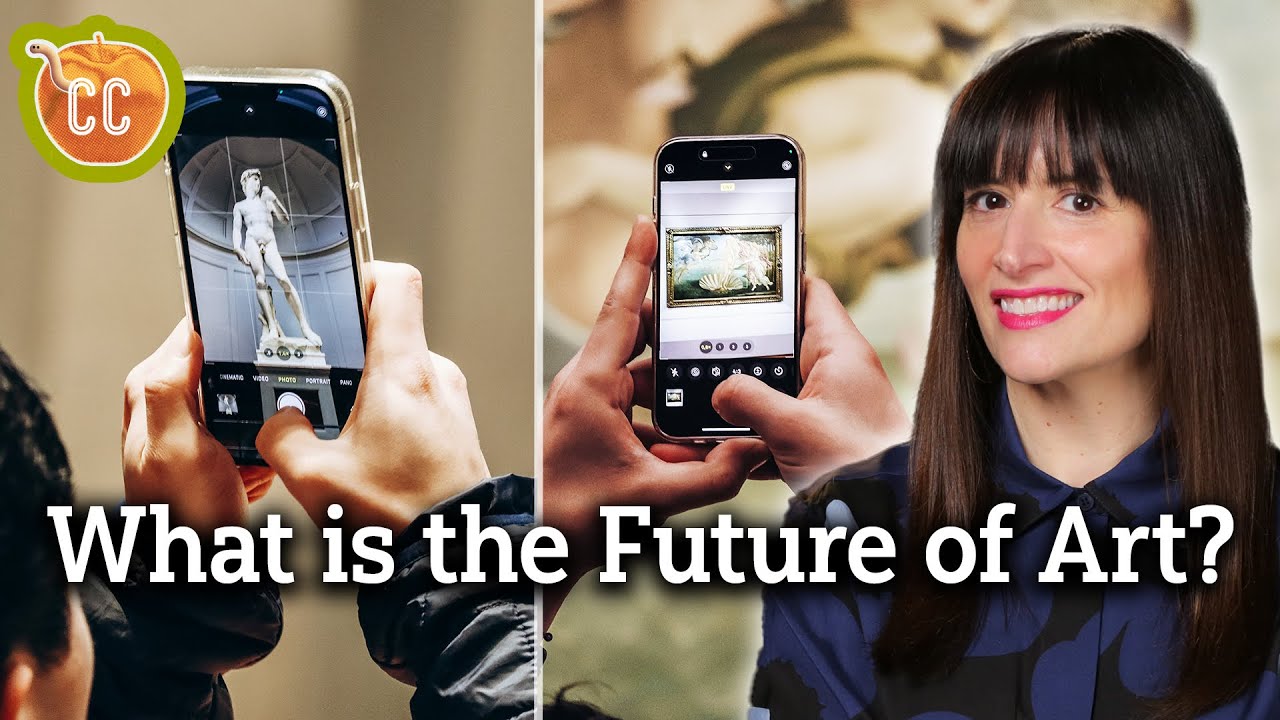
What is the Future of Art?
Keywords
Summary
174 words
Critical Evaluation
Value of the Information & Strength of the Argument
The video provides valuable insights into the intersection of art and technology, offering concrete examples that illustrate the transformative potential of digital tools. The argumentation is well-structured, moving from specific case studies to broader implications. It acknowledges the complexities and trade-offs involved, such as the benefits of accessibility versus the challenges of AI and environmental impact. The narrative is engaging and accessible, making a compelling case for the ongoing evolution of art in the digital age.
Scientific Rigor, Source Quality, Title Accuracy
The video maintains a high level of scientific rigor, with information presented by an expert and supported by references in the description. The sources are credible and relevant, including academic projects and museum initiatives. The title accurately reflects the content, and the episode stays on topic throughout. The production quality is high, and the content is well-researched, though it necessarily simplifies some complex issues for a general audience.
159 words
Title / Content Match
The title accurately reflects the content, which explores how technology is shaping the creation, preservation, and interpretation of art.
Quality & Reliability
8/10
The video is produced by CrashCourse, a well-established educational channel, and features a clear structure with cited sources in the description. The content is presented by an art historian and is generally accurate, though it simplifies complex topics for a broad audience.
Key Moments
Markers derived by PSI from the transcript: the creator did not define chapters.
Cited Sources
- Image Descriptions — Accessibility resource for the episode
- Sources — List of sources referenced in the episode
Concurring Sources
- Digital Karnak — Provides background on the Karnak temple complex, which is discussed in the video.
- Great Migration — Offers context on the historical event depicted in Jacob Lawrence's Migration Series.
External References
Contribution & Novelties
The video offers a comprehensive overview of how technology is reshaping art history, from digital preservation to social media’s influence. It provides a balanced perspective, acknowledging both the benefits and challenges. The episode encourages viewers to consider the future of art as a collaborative and inclusive endeavor.
Pour aller plus loin :
- Digital Karnak — The Wikipedia article on Karnak provides background on the temple complex and its significance.
- Great Migration — This article offers context on the historical event depicted in Jacob Lawrence’s series.
- Arab Spring — The Wikipedia page details the protests and the role of social media in the movement.
103 words
Radar Profile
The radar profile shows high scores in information quantity, quality, and reliability, with a moderate technical level. This indicates a well-researched and informative video that is accessible to a general audience, balancing depth with clarity.
💬 Sur les 0 commentaires analysés, aucune tendance n'est disponible.