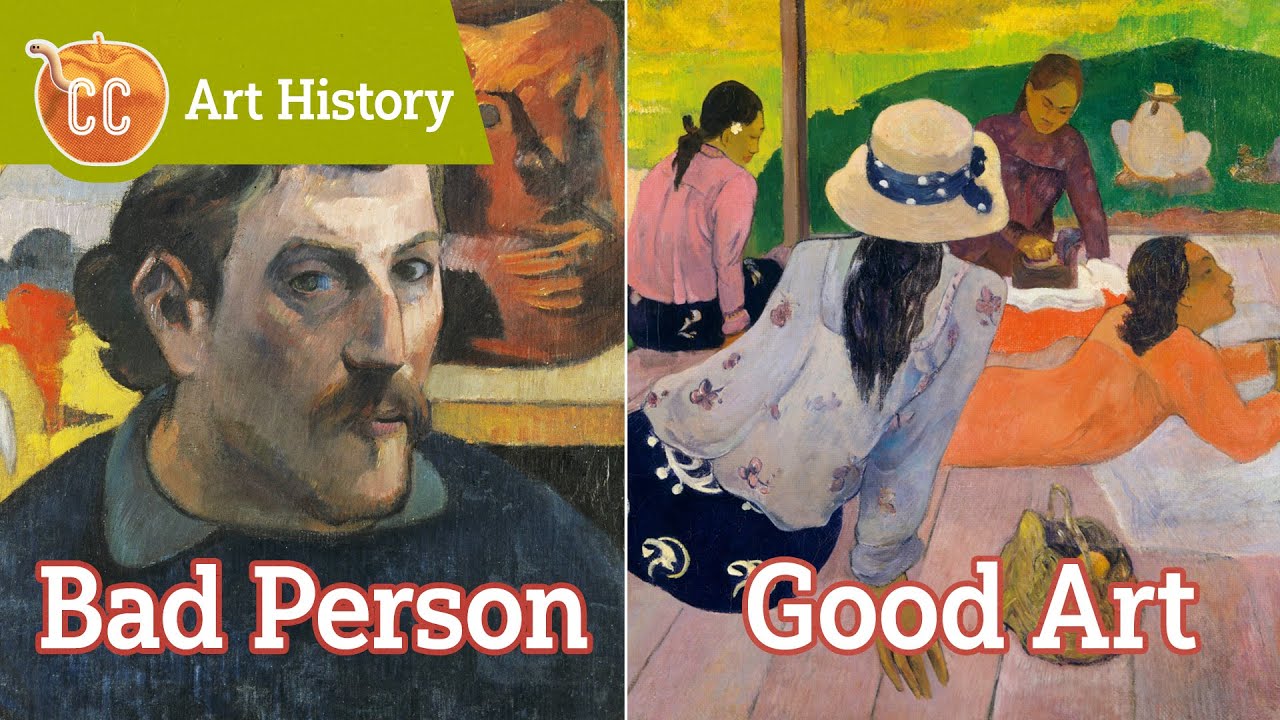
Should We Separate Art from the Artist?: Crash Course Art History #5
Keywords
Summary
199 words
Critical Evaluation
Value of the Information & Strength of the Argument
The video provides substantial value by framing a complex ethical dilemma through accessible historical narratives and concrete examples. It effectively argues against a binary view, showing that the relationship between artist and art is multifaceted. The argumentation is solid: it demonstrates that the ‘Great Artist’ myth is a constructed narrative, historically contingent, and that art emerges from collaboration and context as much as individual genius. The inclusion of diverse perspectives—from Romantic self-portraits to Surrealist introspection and collaborative workshops—strengthens the case. However, the discussion of philosophical and theoretical underpinnings is simplified to maintain accessibility, and the video stops short of proposing a definitive framework for navigating specific cases. Still, it encourages critical thinking and awareness of the layers involved.
Scientific Rigor, Source Quality, Title Accuracy
The video maintains a high level of scientific rigor for an educational series. It draws on well-documented art historical scholarship, and the accompanying sources document (linked in the description) provides further references. The National Gallery’s handling of the Gauguin exhibition is presented as an institutional example, lending credibility. The title accurately encapsulates the content, and the episodic structure follows a logical progression from historical context to contemporary debate. Analysis of the 30 provided comments reveals overwhelmingly positive reception: viewers appreciate the balanced approach, many contribute personal reflections, and several highlight the distinction between deceased and living artists. The overall climate is positive and intellectually engaged, with no notable negative or hostile sentiment.
245 words
Title / Content Match
The title directly poses the central question of the episode, which is thoroughly explored with historical and contemporary examples. The content matches the title accurately.
Quality & Reliability
8/10
The video offers a well-structured, historically grounded discussion of the question, drawing on concrete examples (Caravaggio, Gauguin, Frida Kahlo) and contemporary debates (#MeToo). It acknowledges complexity and avoids simplistic conclusions, though it remains introductory in scope and does not delve deeply into philosophical arguments.
Key Moments
Markers derived by PSI from the transcript: the creator did not define chapters.
- Introduction: Great Artists or Monsters? — Setting the question with examples of problematic artists.
- The 'Great Artist' concept — Emergence during the Renaissance and its gendered/racial implications.
- The Romantics & Self-Portraits — Emphasis on interiority, authenticity, and the 'sublime'.
- The Avant-garde & Surrealism — Breaking conventions, Frida Kahlo's self-portraits as example.
- Van Gogh & Gauguin — Collaborative period, the chairs, and the violent conflict.
- Artistic Collaboration — Akbar Nama and Warhol's Factory disprove the solitary genius myth.
- Separating Art from the Artist — Gauguin case study, National Gallery's approach, and nuanced conclusion.
- Review & Credits — Summary and attribution.
Cited Sources
- Crash Course Kids channel — Mentioned in description as a related channel, not a direct source for this episode.
- Image Descriptions document — Accessibility resource for visual content, listed in the description.
- Sources document — Primary list of academic and institutional references cited in the episode.
Contribution & Novelties
This episode contributes to the ongoing cultural conversation about separating art from the artist by synthesizing art historical context with contemporary activism. It challenges the romanticized notion of the solitary genius and emphasizes collaborative production, offering a more nuanced framework than typical divisive debates. The discussion is grounded in concrete examples, making the complex ethical issues accessible to a broad audience.
Pour aller plus loin :
- Great Man theory — Historical concept of individual agency, relevant to the ‘Great Artist’ myth.
- Intentional fallacy — Literal criticism concept about authorial intent, directly related to separating art from artist.
- Paul Gauguin — Provides background on the painter’s life and controversial relationships.
- National Gallery exhibition on Gauguin — The 2019 exhibition mentioned in the video, showing institutional handling.
125 words
Radar Profile
The radar chart shows a balanced profile with high scores in information quantity and quality, and moderate technical level. This reflects an accessible yet substantive educational piece that prioritizes clear communication and factual accuracy over advanced theoretical depth. The global reliability score is strong, aligning with the series' reputation for careful scholarship.
💬 Positive. The 30 comments analyzed show appreciation for the balanced and nuanced treatment of the topic, with many viewers adding their own perspectives on the ethical dilemma, and a notable subset highlighting the distinction between living and deceased artists.